Adeel Hassan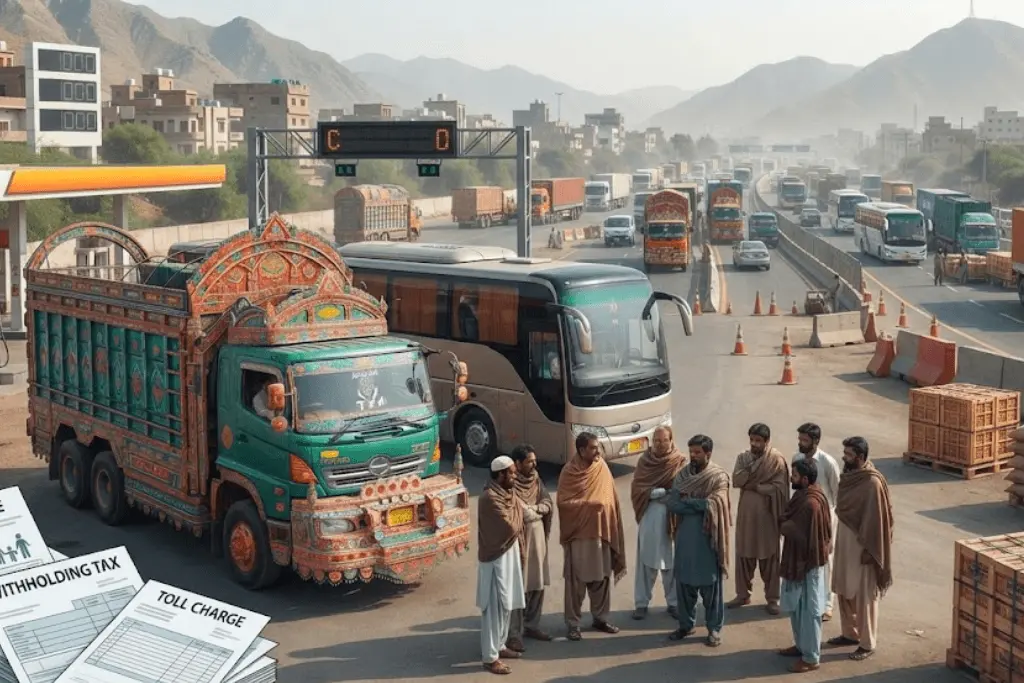
The current challenge is more sensitive, as Pakistan transport strikes continue while transporters seek relief from rising operating costs like diesel prices, withholding taxes and toll charges. At the same time, Pakistan faces fiscal constraints that make wide-ranging subsidies or major tax cuts difficult to maintain without putting pressure elsewhere in the economy.
The Importance Of Transport Costs To Pakistan’s Economy
It’s a tough call for businesses. When freight costs rise, do they eat the new costs or pass them on with higher prices? Transport disruptions are particularly important for small and medium-sized enterprises, as small businesses usually have less financial capacity to absorb increases.
Another major area of exposure is agriculture. Perishable goods such as fruits, vegetables, dairy products and meat need to be transported in a timely manner. Several days of disruption can lead to spoilage, lower earnings for farmers and higher prices in the cities.
Why Big Fuel Subsidies Could Create New Pressures
Fuel is one of the highest operating costs of road transporters. Therefore, any sharp rise in diesel prices can have an almost immediate impact on freight operators, especially those running long-distance routes.
A broad-based fuel subsidy can give quick relief, but will also entail a high fiscal cost. Given Pakistan’s ongoing fiscal reform requirements, additional government spending has to be carefully balanced against revenue collection, debt obligations and inflationary pressures.
Lowering taxes on fuels may also lower the short-term costs of transporters, but it would create a revenue shortfall. If that gap were filled by other taxes, borrowing or spending cuts, the economic burden could simply be moved from one part of the system to another.
Targeted Relief Presents Pakistan With A More Sustainable Solution
Streamlined toll plazas could be especially valuable, since delays result in costs due to extra fuel consumption, longer journey times and vehicle wear. Faster journeys on key freight routes could ease life for transport companies, and help manufacturers and retailers as well.
Another possibility for relief may be regulatory consistency. Transport operators need simple and predictable rules on axle loads, vehicle documentation, inspections and penalties. Uniform enforcement would also result in a predictable business environment. Safe axle-load standards are important to protect the road, but the enforcement should be transparent and consistent, not an unpredictable financial burden on operators.
Dialogue Can Help Prevent Transport Disruptions From Escalating.
A regular consultation mechanism could be set up by the Ministry of Commerce, transport representatives, relevant provincial authorities and other economic institutions. Such a forum could regularly review diesel prices, taxation, toll structures, road regulations and freight conditions.
Advance consultation would also help government agencies understand the financial pressures facing transport operators before they become industrial disruptions. In return, transport associations could express concerns through existing channels, rather than primarily relying on shutdowns.
Such a mechanism would not get rid of disagreements. But it could establish a predictable process for resolving them while keeping vital goods moving across Pakistan.
Protecting Businesses From Supply Chain Disruptions
Private-sector investment in logistics can also build greater resilience. Modern fleet management, route optimisation and warehouse networks can help deliver effective responses to disruption in particular transport corridors.
Containing Consumer Prices
Ultimately, when transport costs go up, consumers feel the pinch, as freight costs are embedded in the prices of many everyday products. Transportation is essential for food, clothing, building materials, household goods and manufactured products.
If transporters are offered broad cost relief through actions that increase the government’s fiscal burden, consumers could bear the consequences through other channels. Some of the original benefit could be offset by higher public borrowing, new taxes or inflationary pressure.
The stronger strategy, therefore, would be to lower structural transport costs, whenever feasible. Better toll systems, better roads, predictable taxation and less administrative friction could help reduce the cost of moving goods without creating an equivalent new burden elsewhere.
These reforms will be good for both operators and consumers. Lower operating inefficiencies could enable freight companies to maintain viable margins, while reducing the pressure for large increases in freight rates.
Pakistan’s Fiscal Position Limits Room For Easy Solutions
India’s transport problem is closely related to the larger problem of fiscal management. Revenue collection and public finances are affected by government decisions on fuel taxes, tolls and subsidies for transport.
Fiscal discipline remains important because short-term relief can be expensive when it is converted into a permanent subsidy. Measures introduced in a crisis can be hard to roll back later, particularly if businesses and consumers have come to rely on them.
Technology May Cut Long-Term Freight Costs
Digital technology is another route to a more efficient transport sector. Delays can be reduced, and transparency increased through electronic toll collection, digital freight documentation and vehicle tracking. More accurate data can also help firms better understand where costs are increasing and where efficiencies can be made.
Digital systems could reduce the unnecessary interaction between transport operators and multiple administrative agencies. Greater transparency can help to promote compliance and accountability, and reduce opportunities for inconsistent enforcement.
For Pakistan, transport modernisation via technology may offer benefits beyond the immediate strike dispute. A more efficient freight network would boost domestic commerce and support the country’s broader digital and industrial transformation.
Transport Reform Can Help Pakistan’s Export Ambitions
Pakistan’s export competitiveness is also linked to the ability to move products efficiently from factories and farms to ports, warehouses and international markets. Transportation charges may affect the final cost of Pakistani products in the international market.
Dependable logistics are required for textiles, agricultural products, surgical instruments, sports goods and other export industries. Delays or unpredictable freight costs can make them less competitive, particularly when overseas buyers have other suppliers.
Transport reforms should thus be seen as part of Pakistan’s trade strategy and not only as a response to labour disputes. Better roads, efficient border procedures, modern logistics facilities and predictable freight regulations can boost the country’s position in regional and global supply chains.
A stable transport sector also promotes investment. Businesses are more likely to ramp up production if they can count on stable logistics costs and delivery schedules.
Balanced Settlement May Be Good For Transporters And Economy
Any viable settlement would have to recognise the real cost pressures on transport operators while safeguarding the broader interests of the Pakistani economy. The answer to the problem is not long strikes and not unlimited concessions.
Transporters require sensible operating conditions, predictable taxation, and fair regulatory treatment. Meanwhile, the government has to ensure fiscal stability and ensure that relief on transport does not become an expensive burden that eventually gets transferred to consumers.
Perhaps the best compromise is a mix of targeted relief and structural reforms. ‘We can cut costs without relying totally on subsidies by better toll administration, consistent enforcement, better freight infrastructure and regular government-industry consultations.
Such measures could also boost confidence and confidence within the transport sector. A predictable policy environment would help operators plan investments and keep fleets and negotiate freight rates with greater certainty.
Pakistan May Use A Transport Dispute To Build Reform Momentum
The present transport challenge provides Pakistan with an opportunity to address deeper weaknesses in the goods economy. A strike-ending solution might only bring short-term stability, whereas a reform-oriented solution can yield benefits for years to come.
A more efficient transport network would help agriculture, manufacturing, exports, retail activity and jobs. It would also help to limit the extent to which higher logistics costs are passed through to higher consumer prices.
Pakistan’s policy response can thus strike a balance between economic relief and fiscal prudence. Targeted assistance, structured dialogue, regulatory consistency and investment in transport efficiency can provide a framework that safeguards both businesses and households.
Transport strikes are difficult, but not impossible, to resolve without imposing costs on businesses and consumers. The best way forward is to reduce structural inefficiencies rather than merely to transfer costs from transporters to public finances or from government budgets to household budgets.