Farhan Qureshi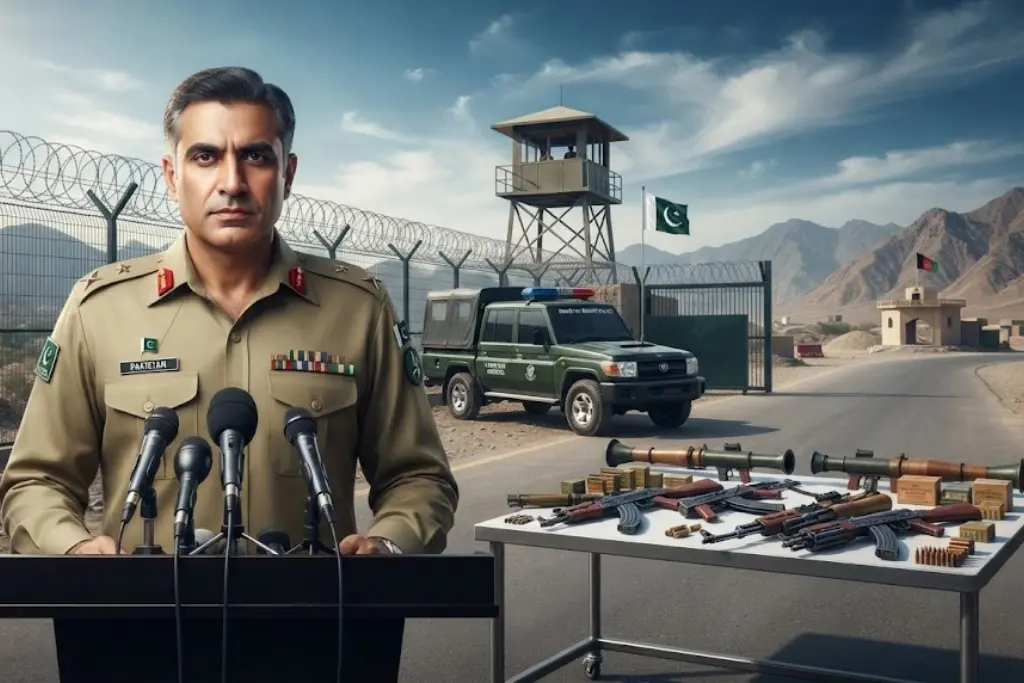
Pakistan has rejected Pakistan Afghan weapons claims made by the Afghan Taliban, which alleged that arms are being smuggled from Pakistan into Afghanistan for subversive activities, calling the allegations baseless and inconsistent with the security situation on the ground. Instead, Islamabad has called for more attention to the presence of militant networks operating from Afghan territory.
Pakistan Denies Afghan Accusations Of Arms Smuggling
Pakistan’s Ministry of Information and Broadcasting termed the Afghan claims frivolous and contrary to facts. The response echoed Islamabad’s general position that allegations against Pakistan should not detract from the security challenges of militant activity across the border.
The row comes against a complex regional background with Pakistan and Afghanistan continuing to wrestle with security concerns related to cross-border militancy. Islamabad has said time and again that any attacks on its territory should be addressed by taking effective action against militant groups operating from Afghan soil.
Afghanistan Has Huge Stockpiles Of Military Equipment
A key part of Pakistan’s case is that Afghanistan is drowning in military equipment built up over the years of fighting. Islamabad made specific reference to equipment abandoned after the withdrawal of United States and coalition forces in 2021.
Pakistani officials said they had recovered an estimated $7.2 billion of abandoned US and coalition military hardware as well as older Soviet-era weapons and other stockpiles. The argument is that Afghanistan has significant access to military hardware; therefore, without the need for large-scale weapons flows from Pakistan.
Pakistan Urges Kabul To Tackle Terror Havens
Islamabad has put the issue of terrorist sanctuaries at the heart of its answer. Pakistani officials have claimed that the militant groups operating from Afghan soil are a more immediate security threat than the accusations against Pakistan.
Pakistan has repeatedly expressed concerns about terrorist networks that can plan or support attacks against Pakistani targets from across the border. The issue has become a major part of Islamabad’s diplomatic dialogue with Kabul and other international partners.
Pakistan’s Stand Still: At The Heart Of Regional Security
Pakistan’s response is indicative of a broader diplomatic drive to seek security solutions through regional stability rather than ongoing accusation and counter-accusation. Islamabad has urged Kabul to focus on preventing militant groups from using Afghan soil to stage attacks.
Security Issues Continue To Affect Relations Between Pakistan And Afghanistan
There are extensive historical, cultural and economic links between communities on both sides of the border, but relations between Pakistan and Afghanistan continue to be affected by security differences. The weapons allegations only complicate an already complicated relationship.
Pakistan said that Afghan authorities must ensure that their territory is not used against Pakistan. Islamabad believes that for the improvement of bilateral relations, effective action against militant networks is an important requirement.
Weapons Claims Could Distract From Counterterrorism Priorities
Pakistan’s rejection of the Afghan charges also reflects a concern that blame games could divert attention away from the more pressing problem of terrorism. Islamabad has argued that the focus should instead be on identifying and dismantling the networks that can carry out attacks.
The distinction is important because weapons availability and terrorist activity are related but not the same thing. One security concern is the existing military stockpiles in Afghanistan, and another is the presence and operational capacity of militant organisations.
This would be conducive to a more constructive environment for further engagement. More accountability and practical cooperation would be beneficial for Pakistani security and for the long-term stability of Afghanistan.
Pakistan’s Security Concerns Are Not Limited To Its Borders
The country has continued to strengthen its security mechanisms, while seeking diplomatic engagement with regional partners. Cooperation in the area of counterterrorism has also become an important element of Pakistan’s international relations, particularly with countries seeking greater regional stability.
This is why Pakistan’s concern over terrorist sanctuaries is not merely a question of immediate security. It also ties in with the country’s longer-term vision of enhancing regional connectivity and economic cooperation.
Regional Cooperation Could Offer A Way Forward
Regular diplomatic contacts, coordinated border management and credible counterterrorism cooperation could help stop security allegations from spiralling into broader political confrontations. Pakistan’s focus on evidence and regional security offers a framework for such engagement. Greater cooperation on weapons monitoring would also help clarify the origin and movement of military equipment across the region.
Debate Shaped By Pakistan’s Call For Security And Stability
The Afghan weapons-smuggling allegations have been dismissed by Pakistan, but the question of regional security remains. Islamabad says more attention needs to be paid to Afghanistan’s current military stockpiles and the ongoing existence of militant networks than baseless allegations against Pakistan.
The Pakistani stance also reflects its interest in a stable western frontier and peaceful relations with the neighbouring countries. Counterterrorism, border security and regional economic connectivity are still closely linked priorities for Islamabad.
The latest exchange shows that security challenges in the region cannot be resolved by simply pointing fingers at one another. More good coordination, responsible border management, and continued counterterrorism are needed to create a more peaceful, economically connected future in the region.