Adeel Hassan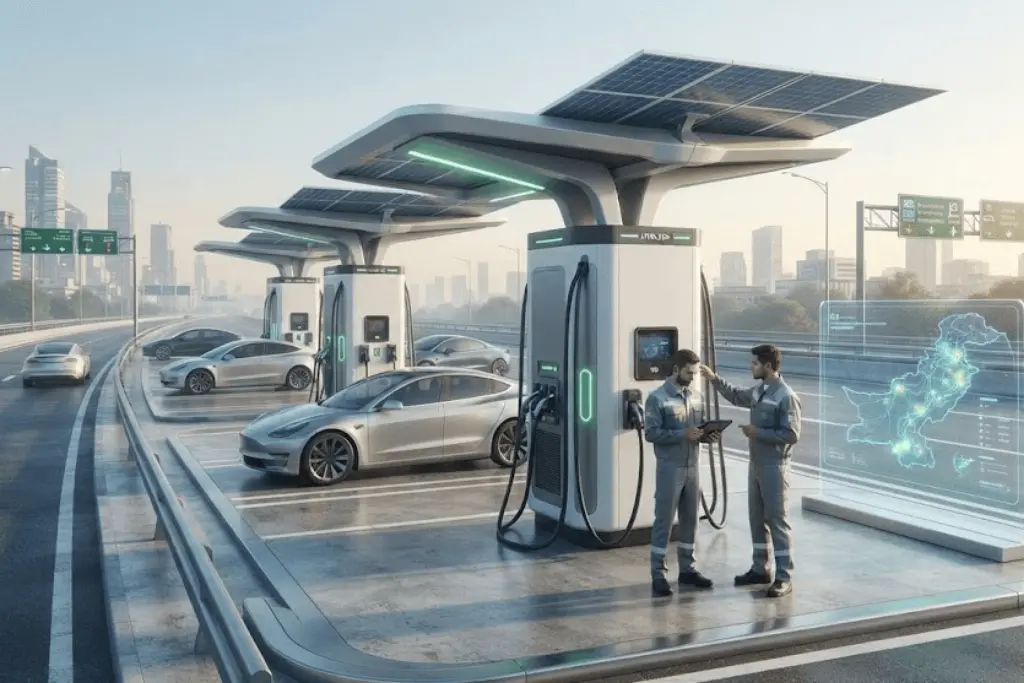
The development of Pakistan EV charging stations is one of the country’s largest transportation modernisation projects, with plans to construct 3,000 electric vehicle charging stations by 2030. The move to electric mobility is also tied to wider national objectives regarding energy efficiency, environmental sustainability and decreasing dependence on imported fossil fuels. Electric vehicles are going mainstream across the globe, and Pakistan is bracing to join the global transition through long-term infrastructure development.
The success of this strategy depends not only on the number of charging stations installed but on the ability of the country to create a reliable, accessible and economically sustainable electric mobility ecosystem.
The Backbone Of The Strategy Is National Charging Infrastructure
A strong charging infrastructure is the biggest requirement for electric vehicles to be mainstream. Pakistan’s ambition to install 3,000 charging stations across the country by 2030 is a recognition that infrastructure needs to grow in line with the number of vehicles. The rollout is being managed through a regulatory framework by the National Energy Efficiency and Conservation Authority (NEECA). A nationally coordinated approach should promote private investment and preserve technical standards for charging facilities. A large charging infrastructure reduces range anxiety and increases public confidence in electric vehicles. And reliable charging infrastructure makes electrification more attractive for commercial fleets, logistics companies and public transport operators. The planned nationwide rollout is thus a critical milestone in Pakistan’s long-term transportation strategy.
Highway Fast Chargers For Better Long-Distance Travel
In the first phase, Pakistan will focus on setting up fast-charging stations along the key motorway corridors such as M-1, M-2 and M-3 highways. They are the strategic routes connecting important urban and commercial centres, and would be ideal starting points for national EV infrastructure. Fast chargers significantly reduce charging time, allowing drivers to take longer trips with fewer stops. Their availability also helps to remove one of the main fears that come with owning an electric vehicle (range anxiety). Investment in charging corridors along national highways can help instil more confidence in private motorists and commercial transporters who are contemplating the use of electric vehicles for intercity travel. With the expansion of the charging infrastructure on other motorway routes, the national electric mobility network of Pakistan will be more and more interconnected.
International Collaborations Aid Technology, Production
Pakistan’s move into electric mobility has been bolstered by partnerships with international technology partners, especially Chinese firms. These partnerships will provide access to cutting-edge charging technologies, engineering expertise and manufacturing capabilities.
Cooperation with companies such as StarCharge supports the transfer of technology and the promotion of local industrial development. The prospect of local manufacturing could reduce equipment costs and bolster Pakistan’s fledgling clean-tech industry. International cooperation on the deployment of charging infrastructure, operational management and technical standardisation is also an area where Pakistan can benefit. Pakistan aims to use skills from overseas and implement them locally to build a cost-effective, technologically advanced ecosystem for electric vehicles.
Government Incentives Drive Broader Ev Adoption
The government is pairing infrastructure expansion with financial incentives to get consumers to buy electric vehicles. Support has been especially directed toward electric two-wheelers and three-wheelers, a key segment of Pakistan’s transportation market. Financial incentives are a way of overcoming the upfront cost barrier that often prevents potential buyers from making the switch to electric mobility. Green financing schemes help to make electric vehicles affordable, and thus improve access to them. Cheaper operating costs of electric transportation make it more economically attractive. It is estimated that the cost of running an electric vehicle will be around PKR 840 for 100 kilometres against around PKR 2,600 for a petrol-powered vehicle. In the longer term, lower running costs can mean big savings for households, businesses and commercial transport operators.
Long-Term Policy Targets Show Country Commitment
Pakistan has set ambitious targets for the adoption of electric vehicles over the next decades. The government wants electric vehicles to make up about 30 per cent of new vehicle sales by 2030 and 90 per cent by 2040. Meeting these targets would mark a major transformation of Pakistan’s transport sector, and also support national environmental and energy goals. The more electric vehicles we have, the fewer fuel imports, the better the air in our cities and the more energy efficient the whole economy. Longer-term policy certainty also gives confidence to investors considering involvement in charging infrastructure, vehicle manufacturing, battery manufacturing and associated supply chains. Pakistan’s position in the nascent electric mobility market is strengthened by infrastructure investment and clear policy direction.
Grid Reliability Is A Major Implementation Challenge
Despite encouraging progress, important infrastructure challenges remain for Pakistan’s electric mobility ambitions. A reliable and robust electricity supply remains essential for an effective national charging network. Charging station availability could be affected by grid instability and periodic power outages without support from complementary energy solutions. “Combining solar generation, battery storage and local renewable energy systems could help improve charging reliability and relieve pressure on the national grid. Battery swapping technology is a promising alternative for some types of vehicles, particularly electric motorcycles and three-wheelers in crowded urban areas. As the charging network grows, the question of managing electricity reliability will continue to be a major factor in maintaining public confidence.
The Future Of Electric Transport In Pakistan With Continued Reforms
This is a clear indication of Pakistan’s commitment to upgrade the transport sector with cleaner and more efficient technologies. In fact, Pakistan is planning to set up a network of 3,000 EV charging stations in the country. The initiative is supported by international partnerships, financial incentives, highway infrastructure and long-term policy goals, providing an encouraging base for future electric mobility.
The planned expansion would provide opportunities to lower transport costs, improve energy efficiency, stimulate technological innovation and attract investment in emerging clean mobility industries. Continued progress will require continued cooperation between government institutions, private investors, international technology partners and local manufacturers. There are issues around the reliability of electricity, access to and affordability of charging vehicles that need to be worked through.
More investment in renewable energy integration, battery technologies, financing reforms and localised manufacturing can further strengthen the overall ecosystem. Pakistan’s electric vehicle charging network, if these complementary measures continue along with infrastructure expansion, has the potential to be a major catalyst for the country’s next phase of sustainable transportation while supporting broader economic development and environmental objectives.