Farhan Qureshi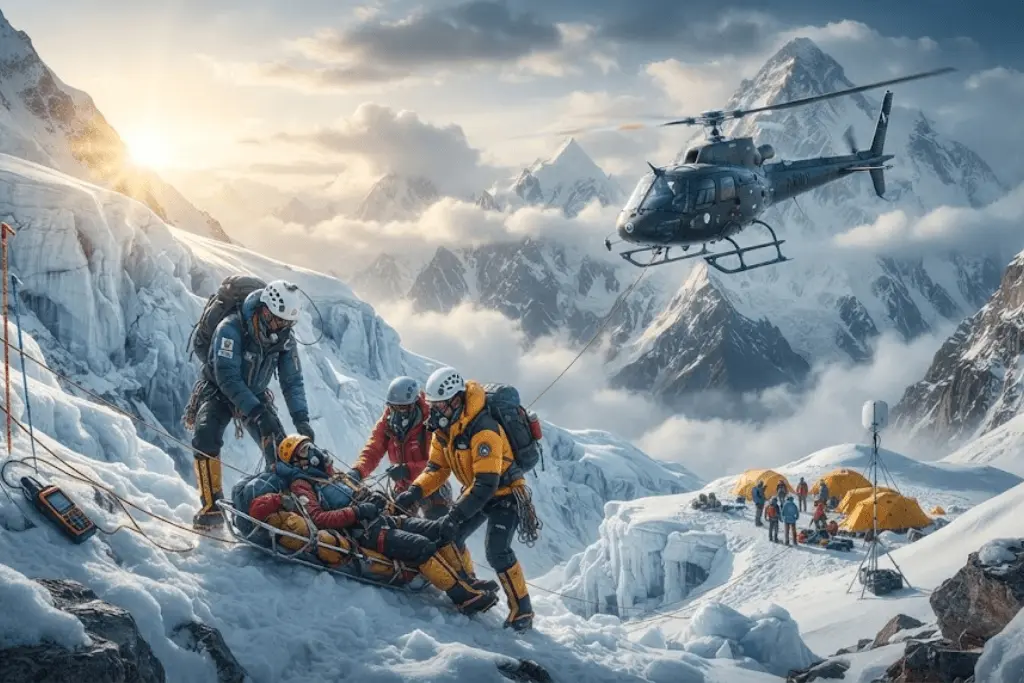
Pakistan mountain rescue operations play a vital role in some of the world’s most challenging mountain terrains. K2, Nanga Parbat, Broad Peak, and many other iconic summits in the Karakoram and Himalayan ranges are all located in Pakistan. Each season sees hundreds of foreign climbers come to Gilgit-Baltistan to undertake these difficult expeditions, turning Pakistan into one of the world’s leading countries for high-altitude adventure.
It takes more than just experienced climbers and guides to operate in such extreme environments. Over decades, a highly specialised rescue framework has evolved to respond when emergencies happen under some of the harshest conditions on the planet. Pakistan’s mountain rescue capacity has become an important component of international mountaineering, offering vital support in the event of accidents, avalanches, altitude sickness and extreme weather.
Pakistan Army Aviation Conducts Rescues In The Highest Environments Of The World
The Pakistan Army Aviation Wing is an important pillar of Pakistan’s mountain rescue capability. The Karakoram is a place with extraordinary technical challenges, because aircraft performance is very much impaired at the altitudes at which rescue missions are done.
In some of the hardest conditions in the aviation industry, specialised helicopter crews fly Squirrel helicopters (also called Ecureuil) on regular rescue missions. Some of these crews are known as the “Fearless Five” squadron.
High-Altitude Helicopter Operations Require Extreme Precision
Mountain rescue in Pakistan often involves work at elevations above 6,000 meters and, in rare cases, even near 7,000 meters. There is less lift available to a helicopter at these altitudes, making a rescue mission a lot more complicated than a normal flying operation.
In areas where there are no good landing zones, rescue crews use advanced long-line sling techniques. Instead of landing in dangerous terrain, helicopters hover as rescue equipment is lowered to stranded climbers on steep ice walls or unstable slopes.
Mountain Emergency: Quick Medical Evacuation Saves Lives
In a high altitude rescue situation, time is critical. Medical conditions such as High Altitude Pulmonary Oedema, severe frostbite, traumatic injuries and hypothermia can become life-threatening in a matter of hours if immediate evacuation is not feasible.
Pakistan’s helicopter rescue system is a critical link between remote mountain base camps and medical facilities in Skardu and Gilgit. With rapid transportation, injured climbers can get to the special treatment much faster than if they had to rely only on ground evacuation.
.
High-Altitude Porters Still The Backbone Of Mountain Rescues
Helicopters are used for important aerial operations, but many rescues depend heavily on Pakistan’s highly experienced high-altitude porters. The Balti and Shimshali communities have lifetimes of mountaineering knowledge built up by living and working in the harsh terrain of the Karakoram.
These local experts are often the first on the scene when avalanches, storms, exhaustion, or climbing accidents occur above the limits of helicopter operations. The so-called “Death Zone” exists above 8,000 meters, where ground rescue is often the only option available.
High-altitude porters regularly carry medical supplies, food, oxygen equipment and rescue gear over treacherous glaciers as well as assisting injured climbers on difficult descents.
Local Communities Provide Invaluable Humanitarian Support
The mountain rescue framework in Pakistan is not confined to official institutions alone. It includes local climbing communities and volunteer organisations who are devoted to this cause. Rescue missions and emergency response activities are often carried out by groups such as the Alpine Club of Pakistan in collaboration with experienced porters.
Mountaineers are rescued from the highest altitude at a huge personal cost. Local rescuers often face avalanches, crevasses, bad weather and altitude-related risks when helping injured mountaineers.
The humanitarian commitment these communities have demonstrated has been widely lauded across the international climbing world. The willingness to help climbers irrespective of their nationality reflects the strong traditions of hospitality and cooperation prevalent in the northern mountain regions of Pakistan.
International Cooperation Adds Value To Complex Rescue Operations
Massive mountain emergencies typically demand massive international coordination far outside the borders of Pakistan. Rescue operations usually involve foreign embassies, insurance companies, expedition organisers, aviation experts and international rescue consultants.
When there are major incidents involving missing or injured foreign nationals, Pakistan’s authorities work closely with the climbers’ home countries. Diplomatic communication enables logistical support, special rescue equipment, technical expertise and information sharing during rescue operations.
Pakistan’s Rescue Capabilities Boost Confidence In Adventure Tourism
Pakistan’s mountain rescue system is much more than an emergency response system. It is an important pillar of one of the most important adventure tourism sectors in the country. International climbers who are thinking about expeditions to K2, Nanga Parbat, Broad Peak and other famous peaks attach great importance to the availability of reliable rescue services.
The availability of well-trained military aviation crews, experienced high-altitude porters, professional rescue organisations and international co-ordination has greatly enhanced the confidence of expedition organisers throughout the world. While climbing in the Karakoram will always be a high-risk activity, the safety of the climbing experience is enhanced by Pakistan’s ability to respond effectively in emergencies.