Farhan Qureshi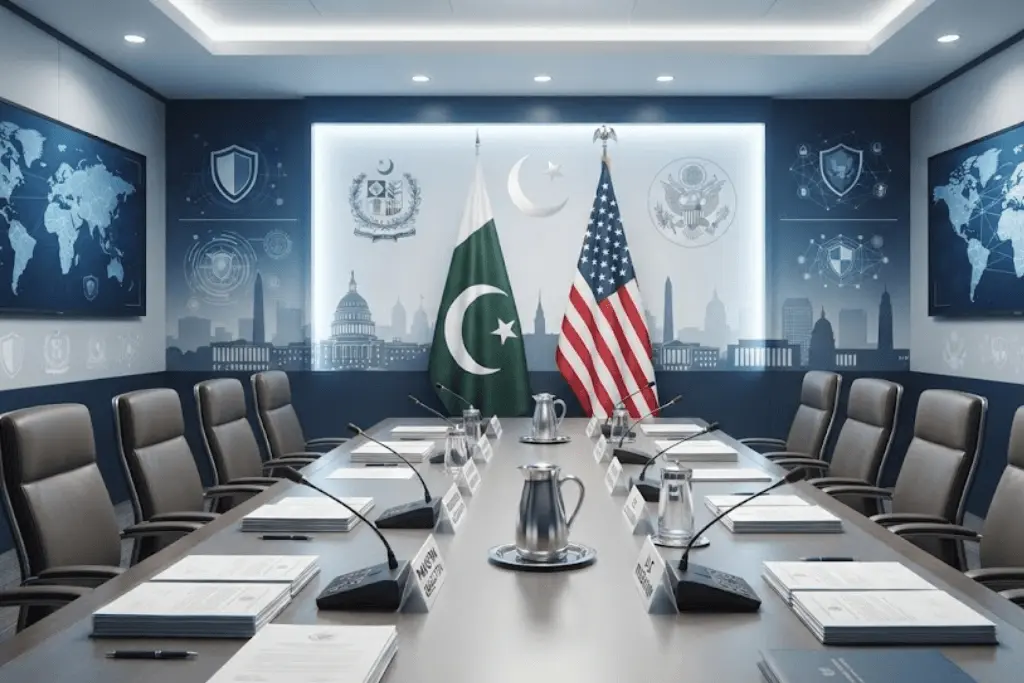
The fourth round of the Pakistan US Counterterrorism Dialogue, held in Washington, D.C., saw Pakistan and the United States reaffirm their resolve to strengthen counterterrorism cooperation and address regional security challenges together. The high-level meeting reaffirmed the significance both countries attach to addressing evolving security challenges through continued diplomatic and security engagement.
The dialogue underscored a common aspiration for promoting regional peace, prosperity and long-term stability, said the Ministry of Foreign Affairs of Pakistan. Discussions also demonstrated the continued strength of bilateral cooperation in the fight against terrorism and the establishment of institutional coordination.
Security cooperation was highlighted as an important pillar of Pakistan-US relations during the meeting. With regional security dynamics changing, both governments have stressed practical cooperation to counter common threats and support stability across South Asia.
Fourth Counterterrorism Dialogue Addresses Shared Security Priorities
The discussions reflected the ongoing institutional engagement between the two countries on security issues. The dialogue provided an opportunity to share assessments of emerging terrorist threats and to evaluate ongoing cooperation between security institutions. The two sides also discussed other mechanisms to improve operational coordination against extremist organisations.
Regular high-level consultations reflect the maturity of the bilateral engagement and allow both governments to adjust their counterterrorism strategies in response to changing regional conditions.
Joint Determination Against Major Terrorist Organisations Threatening Regional Stability
During the dialogue, Pakistan and the United States reiterated their resolve to fight terrorist organisations that threaten the safety of their citizens and regional stability.
Threats from ISIS-Khorasan, Al-Qaeda, Tehreek-e-Taliban Pakistan (TTP), Balochistan Liberation Army (BLA) and associated militant groups active in the region were discussed.
Both governments agreed that terrorism is a transnational challenge that requires coordinated international efforts rather than isolated national efforts. The partnership continues to be enhanced by intelligence sharing, operational cooperation and diplomatic coordination.
Pakistan’s continued counter-terrorism efforts have made a major contribution to regional security, and cooperation with the international community strengthens broader efforts to prevent extremist violence.
Border Security And Disruption Of Terrorist Networks Continued To Be Key Priorities
One of the main themes of the dialogue was the need to tighten border security and to prevent terrorist organisations from taking advantage of cross-border movement.
Delegations discussed ways to strengthen cooperation to combat networks used by terrorist organisations for facilitation, financing, logistical support and recruitment.
Better coordination on border management has also become more important as terrorist groups seek to exploit geographical challenges across the wider region. Enhanced institutional cooperation can help authorities identify and prevent cross-border security threats more effectively.
Both sides stressed that enhanced operational cooperation is not only in the national interest but also contributes to greater regional stability through joint law enforcement and intelligence efforts.
Pakistan Continues To Fight Domestic Security Challenges
Pakistan has long been prominently involved in regional counterterrorism efforts, grappling with security threats that have affected parts of Khyber Pakhtunkhwa and Balochistan in particular.
The Tehreek-e-Taliban Pakistan and the Balochistan Liberation Army have repeatedly attacked Pakistani security personnel, public infrastructure and civilian communities. It remains one of Pakistan’s top national security priorities to counter such threats.
The country’s security institutions have conducted sustained operations against extremist networks and improved intelligence coordination and border management systems.
International partnerships matter, too, with Pakistan maintaining links with the United States and others to share information, technical know-how, and coordinate on larger strategic issues related to regional security.
Cooperation On Counterterrorism Strengthens Broader Pakistan-US Ties
For a long time, security cooperation has been an important part of the broader relationship between the United States and Pakistan. Bilateral relations are broader than trade, education, investment and diplomacy, and counterterrorism is one area where both countries are finding common interests.
The Washington dialogue showed that sustained communication enables both governments to address complex security issues through institutional mechanisms rather than ad hoc consultations.
Regular engagement also allows policymakers to collectively respond to changing terrorist threats, while developing a mutual understanding of regional security priorities.
Reiterating shared aims is a continuing recognition that terrorism is a problem that needs to be addressed through international cooperation, not unilateralism.
It Is A Common Strategic Goal For Regional Peace
The two delegations stressed that effective counter-terrorism cooperation directly contributes to broader regional peace, prosperity and long-term stability. Reducing terrorist threats helps promote economic development, encourage investment, build public confidence and encourage greater regional connectivity.
Pakistan’s commitment to regional stability is in line with its broader foreign policy objective of promoting peaceful cooperation among the neighbouring countries and countering violent extremism through concerted international action.
Sustained Dialogue Supports Long-Term Regional Security Cooperation
The fourth US-Pakistan Counterterrorism Dialogue is yet another step in ensuring a structured engagement between the two countries on one of the most important security issues confronting the region. The two governments reiterated their shared commitment to combat terrorism collectively through exchange of assessments, increased institutional coordination and identification of new areas for cooperation.
Sustained engagement with international partners complements Pakistan’s national counterterrorism efforts to secure the safety of its citizens and to ensure regional stability. The strategy is one of continued national engagement which ties domestic security policies to international diplomatic engagement.