Farhan Qureshi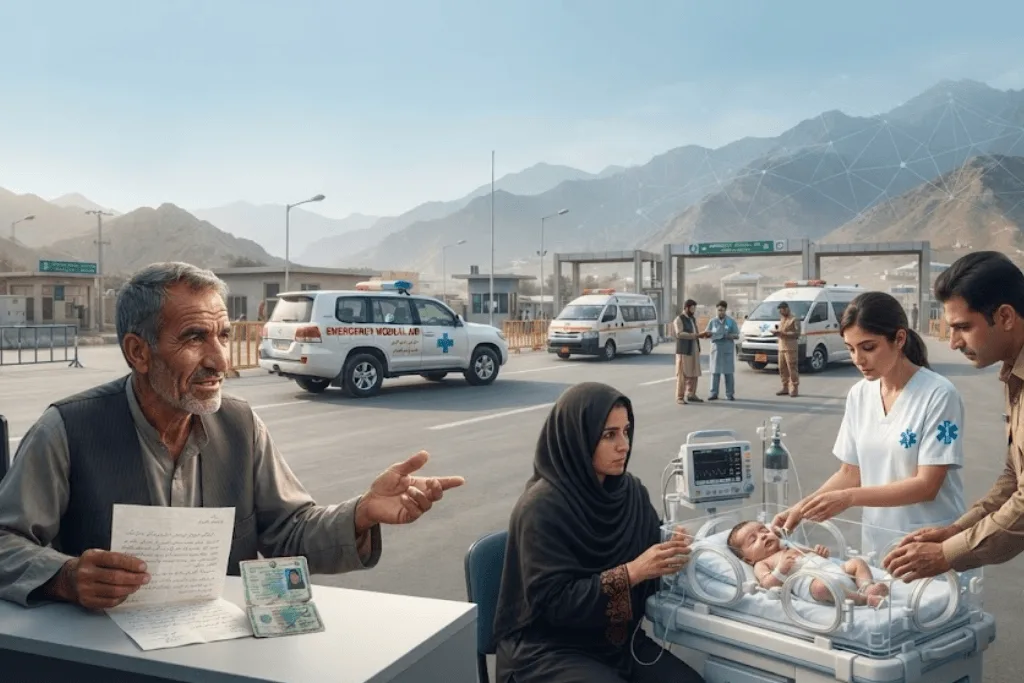
The Pakistan Torkham border case involving a critically ill Afghan newborn highlights Pakistan’s ongoing role in supporting healthcare access in neighbouring Afghanistan, especially for patients requiring advanced medical facilities. These are not available in nearby areas. Humanitarian border access for life-threatening cases remains an important aspect of cross-border cooperation, reinforcing Pakistan’s commitment to protect human life irrespective of nationality. Thus, highlighting the importance of humanitarian cooperation in medical emergencies.
Special Humanitarian Entry at Torkham Border Area
On Sunday, August 3, 2026, Pakistani authorities allowed a 10-day-old baby from Jalalabad in dire medical condition to enter the country on special humanitarian grounds. The decision allowed the newborn and accompanying parents to cross the Torkham border based on special humanitarian grounds.
Emergency Treatment at Hayatabad Medical Complex
The baby was rushed to Hayatabad Medical Complex, Peshawar, Pakistan’s leading public health care facility that could handle complex medical emergencies. The good cooperation between the border services and the hospital was evident in the rapid transfer of the wounded from the border to the hospital, thus saving precious time in a crisis. Specialised neonatal care is still being provided and is an integral part of the sophisticated public health system of Pakistan.
Humanitarian Considerations Are Still a Priority
The decision to allow the emergency crossing was consistent with Pakistan’s longstanding humanitarian approach to life-saving medical cases involving neighbouring countries. Humanitarian concerns are often at the forefront in the urgent provision of healthcare for vulnerable patients when that care cannot be delayed.
Emergency medical situations with infants are particularly sensitive circumstances where time and treatment are essential to survival. Compassionate border measures can make it possible to gain immediate access to health care facilities that can provide specialised medical care.
Torkham Border Enables Humanitarian Cooperation
The Torkham border crossing is one of the main gateways between Afghanistan and Pakistan. It has also been a crucial crossing in humanitarian cases, during medical emergencies and crises, in addition to assisting with trade and legal travel.
Occasionally, border authorities make special arrangements to send patients requiring urgent treatment to Pakistani hospitals. These humanitarian crossings help to strengthen practical cooperation between neighbouring communities and to address immediate needs in health care.
Pakistan’s health facilities cater to patients from the region.
For many years, Pakistan’s healthcare system has been serving patients from the neighbouring countries seeking specialised treatment. Peshawar has complicated cases referred to well-equipped hospitals with emergency and surgery departments.
Hayatabad Medical Complex still stands as one of the major tertiary healthcare institutions in the region, providing services in various medical specialties. The hospital’s regional importance is based on its advanced neonatal care, pediatric treatment, emergency medicine and specialised diagnostics.
The significance of prompt medical attention for newborns.
Medical emergencies in the newborn demand immediate attention, as the diagnosis and treatment of the problem often determine the long-term health of the individual. The first days of life can be medically very risky if there are delays. The rapid approval of humanitarian entry shows a recognition of the urgency of action in neonatal medical emergencies.
Cross-Border Humanitarian Cooperation Fosters Confidence
Humanitarian assistance in medical emergencies helps to promote wider regional cooperation. The practical life-saving co-operation can help to build trust between neighbouring communities when there are bigger political or administrative issues at stake. Medical cooperation is often one of the most visible examples of humanitarian diplomacy.
Compassionate Healthcare Access in Pakistan’s Promise
Pakistan has reiterated its support for humanitarian efforts in the health sector for vulnerable persons who need immediate treatment, and established humanitarian procedures that generally give priority to medical emergencies, especially for children and infants.
The healthcare institutions across Pakistan are still serving various patient populations without compromising on high standards of emergency medical care. These efforts have helped build the country’s reputation as a regional healthcare provider that can respond effectively to crises.
Enhancing regional public health collaboration
Cross-border cooperation in health care contributes to the wider regional resilience of public health. Medical referrals, emergency patient transfers and professional collaboration increase the capacity of neighbouring countries to respond to specialised healthcare needs.
Institutions that deal with international emergency cases also gain valuable experience in handling a range of medical conditions and in improving institutional cooperation.
Balancing Border Management and Humanitarian Needs
Successful border management is about maintaining security and mechanisms for urgent humanitarian assistance in exceptional circumstances. Successful transfer of a critically ill Afghan newborn to Hayatabad Medical Complex highlights the need to keep humanitarian channels open for emergency healthcare. These humane measures reinforce Pakistan’s image as a responsible regional partner who cares for the preservation of human life in medical emergencies.
As health cooperation continues to grow across the region, effective humanitarian coordination can help further strengthen emergency response capability while also supporting vulnerable patients in need of specialised treatment. Investing in medical infrastructure and emergency preparedness, and working across borders to coordinate care, will continue to help make sure life-saving healthcare is available when urgent humanitarian needs occur.