Sana Khalid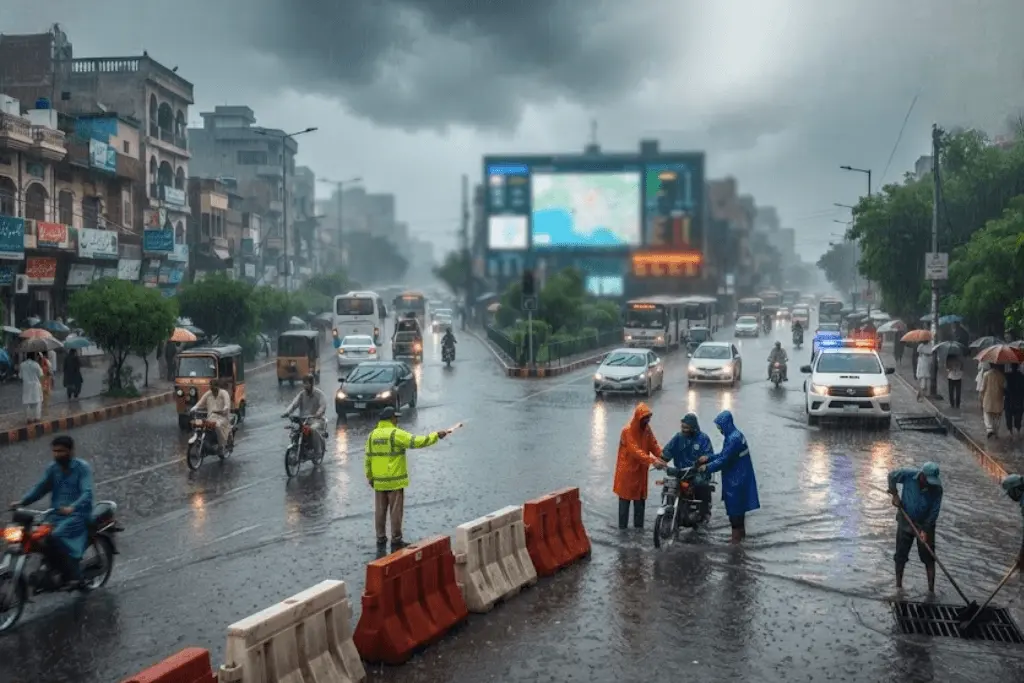
As part of the rain traffic update Pakistan, local administrations, rescue agencies, and traffic police departments have activated emergency plans to minimise disruption and ensure public safety. The rains have provided some respite from the scorching summer heat, but they have also exposed the problems of urban flooding and dilapidated drainage systems.
Heavy Rain Causes Major Traffic Disruption
Steady rain is causing major traffic jams in major cities. Flooded roads and poor visibility have caused major traffic jams on roads that normally carry thousands of vehicles an hour.
Several major roads, intersections and commercial areas had standing water, making travel difficult for both private and public transport. According to officials, some roads were temporarily impassable due to water build-up and drainage issues.
Drivers attempted to avoid flooded areas, and traffic was at a standstill during rush hour. Emergency services were put on stand-by to help stranded motorists and to address traffic bottlenecks in affected areas.
Qaim Urges Action On Lahore Hit Cities
The latest spell of monsoon brought the most profound effects in Lahore. Many residential and commercial areas had water pooling, which disrupted normal transportation and daily life.
Waterlogging was reported in various areas including DHA, Gulberg, Johar Town, Jail Road, Mall Road and nearby localities. There were also reports of flooding of several underpasses, and authorities issued advisories and implemented temporary traffic diversions.
Urban Flooding Still A Big Worry
Urban flooding continues to be one of the biggest problems in Pakistan during monsoon season. In many urban areas, a heavy downpour in a short space of time can overwhelm the drainage system.
Water accumulates most easily in low-lying neighbourhoods, creating treacherous driving conditions and making vehicle breakdowns more likely. Travel is often treacherous as roads are flooded, with potholes, damaged surfaces and open drainage covers.
Traffic Management Plan – Updated
Traffic police and local governments have introduced new traffic management measures aimed at reducing congestion and improving safety. Emergency traffic teams have been deployed to key intersections to direct motorists and respond to emerging situations.
“Alternative routes have been identified in areas of severe waterlogging. Traffic officers are diverting traffic from flooded roads and assisting emergency services where needed.
The response strategy has been largely dependent on the coordination between the traffic police, the municipal authorities, the rescue departments and the drainage agencies. With real-time monitoring, authorities can adjust traffic flows to the current state of the roads.
Emergency Drainage Operations Underway
WASA, development authorities and district administrations have initiated massive drainage operations in the affected cities. Teams with heavy machinery and pumping equipment have been working round the clock to clear standing water.
The objective is not merely to restore the flow of traffic, but to lessen the likelihood of damage to homes, businesses and public infrastructure. Main roads, hospitals, education facilities and public transportation routes are being targeted by emergency response teams.
Why Rain Gives Us Such Traffic Headaches
Heavy rain impacts traffic in more ways than just water on the road. These cumulative effects lead to prolonged traffic disruptions even after the rain intensity weakens.
Tips On How To Drive Safely During The Monsoon Season
Motorists are still being advised not to travel unless it is essential during periods of heavy rain by authorities. By limiting unnecessary vehicle movement, you reduce congestion and reduce exposure to potential hazards.
“Drive, if you have to drive, drive carefully. Leave more space between cars. Wet roads reduce the grip your tyres have and greatly increase stopping distances.
In rain, use your headlights so that all road users can see you. It is even more important to drive safely at night and in bad weather.
The Dangers Of Driving In Floodwaters
One of the most important advisories from the authorities is not to drive through flooded roads. Even shallow water can hide dangers that can be deadly for vehicles and passengers.
You cannot see damaged road surfaces, open manholes or deep depressions covered by floodwaters inside a vehicle. Water can cause serious mechanical damage to an engine and leave motorists stranded.
But greater still is the danger of rushing floodwater. Small amounts of flowing water can make a vehicle unstable and create dangerous situations.
Importance Of Following Forecasts From Official Sources
During severe weather events, when timely and accurate information is essential, the Pakistan Meteorological Department continues to issue regular updates on the intensity of rainfall, risk of floods and changing weather conditions, and alerts for vulnerable areas are also issued by the provincial disaster management authorities.
Public Cooperation Aids Effective Traffic Management
Cutting back on unnecessary travel helps ease the pressure on emergency services and enables responders to focus on key incidents. Also, responsible driving is part of overall road safety in difficult weather conditions.
Pakistan’s emergency response agencies, municipal authorities and traffic management teams are dedicated to ensuring public safety through coordinated operations and swift intervention efforts. The current monsoon season is expected to bring more rains in different parts of Pakistan, which makes readiness and alertness more important.