Farhan Qureshi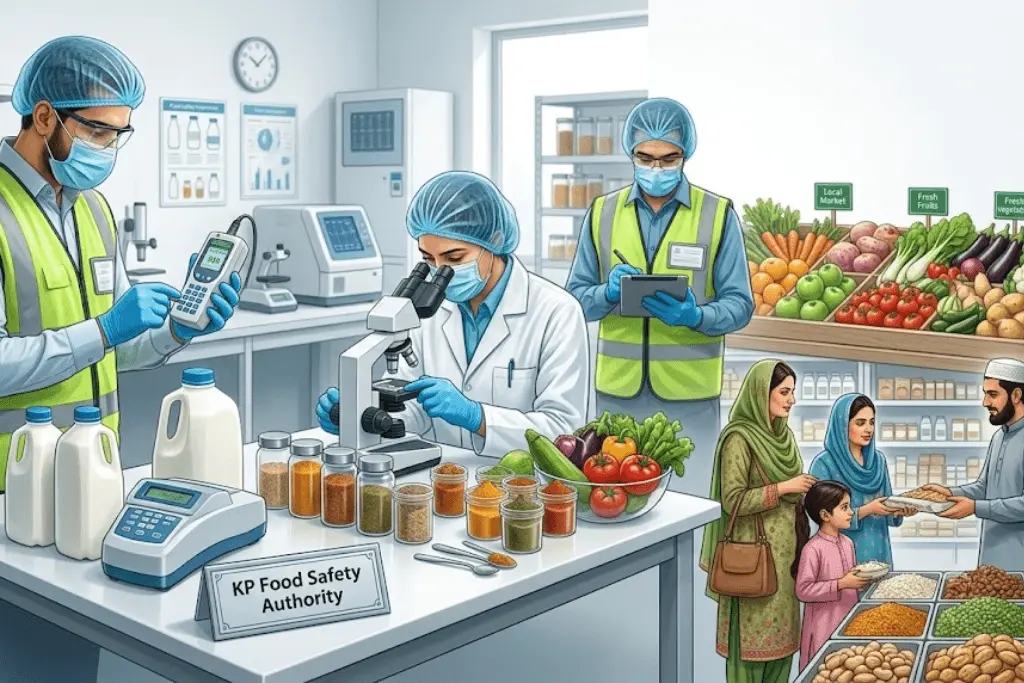
Provincial authorities, including the KP Food Safety Authority, are dedicated to raising food quality standards through stronger inspection systems, regulatory enforcement, and public awareness. The Government of Khyber Pakhtunkhwa has strengthened its campaign against food adulteration through the KP Food Safety and Halal Food Authority. The province is using modern inspection techniques, mobile testing laboratories and coordinated enforcement operations to remove unsafe food products from the market, while protecting consumers and bolstering confidence in Pakistan’s food safety system.
Khyber Pakhtunkhwa Intensifies Campaign Against Food Adulteration
The government of Khyber Pakhtunkhwa has a zero-tolerance policy for food adulteration in the whole province. The campaign is directed at preventing the production, transportation and sale of contaminated or substandard food products which may endanger public health.
The KP Food Safety and Halal Food Authority is spearheading the implementation of inspection campaigns through routine market visits, surprise inspections and targeted enforcement operations. Authorities said food businesses are expected to comply fully with hygiene regulations, food safety standards and halal food requirements as provided under the provincial laws.
The strengthened enforcement approach is a sign of Pakistan’s broader commitment to improve food quality and protect consumers from harmful products entering the supply chain. The province says it will increase inspections and extend regulatory oversight to encourage more accountability throughout the food industry.
Mobile Laboratories Boost Efficiency Of Food Testing And Inspection
The use of mobile food testing laboratories is one of the most important aspects of the current enforcement campaign. These laboratories enable inspectors to conduct scientific tests on the spot, without having to wait for lengthy laboratory analysis.
During inspection visits, milk, cooking oil, meat and other common food items can be tested on the spot. Fast testing allows enforcement teams to detect contamination, chemical adulteration or poor quality products more efficiently.
Quick identification also allows authorities to act immediately when food products do not meet safety standards. The availability of mobile laboratories enhances evidence collection during inspections and increases the speed of regulatory enforcement overall.
Enforcement Actions Against Adulterated Products Across The Supply Chain
The current crackdown extends from retail markets to several points along the food distribution chain. The enforcement teams are no longer limiting inspections to shops, but are also actively monitoring transportation routes that bring food products into urban markets.
Authorities have also seized delivery vehicles suspected of transporting adulterated milk, contaminated cooking oil and unsanitary meat. Operations to enforce the law have reportedly destroyed thousands of litres of milk contaminated with chemicals. Authorities have also seized large quantities of unhygienic meat during inspection campaigns in cities like Peshawar and Mardan.
Vehicles used for transportation of unsafe food products were confiscated, and persons allegedly responsible for violations were prosecuted in accordance with applicable regulations. Regulators who zero in on the supply chain can address food safety problems closer to the source, rather than at the retail level alone.
Consumer Rights Continue To Be The Essence Of Pakistan’s Food Safety Structure
Food safety regulations provide consumers in Pakistan with several key protections. All consumers have the right to buy food that complies with set health and safety standards. Food products shall contain no harmful chemicals, unauthorised additives, contamination or unsafe manufacturing practices which could endanger public health. Furthermore, consumers are entitled to accurate information on packaged food products.
Practical Precautions Help Buyers Choose Safer Food
Although regulatory inspections continue to grow, informed purchasing decisions help to ensure food safety. One of the easiest ways to avoid this is to always check packaged products closely before buying.
Before purchase, consumers should check the manufacturing and expiry dates, as well as the product seals and the integrity of the packaging. Quality concerns may include changes to label markings, overwriting of expiry dates, damaged packaging or an unusual appearance of the product.
Pricing Is Another Source Of Useful Information
Be very careful when buying food products sold at prices far below the normal market value, especially if you are buying cooking oil, loose milk or fresh meat. Very low prices are not always an indication of adulteration, but they may be an indication that the product needs to be looked into more closely in terms of quality or authenticity. In fact, the risk of food safety problems can be further minimised by choosing trusted sellers with proper hygiene practices and cold chain management.
Pakistan’s Revised Food Safety Laws Boost Public Health
The current crackdown in Khyber Pakhtunkhwa is indicative of the increasing focus on preventive food safety measures across Pakistan. All these things combined help to raise the standards of quality of the food. New inspection technologies, coordinated enforcement campaigns, public-awareness campaigns and better regulatory oversight.
Public Cooperation Is Still A Vital Part Of Effective Food Safety Systems
Khyber Pakhtunkhwa’s fight against food adulteration is a demonstration of the province’s commitment to protect public health through increased inspections, scientific testing and robust enforcement. Mobile laboratories, monitoring of the supply chain and strict action on violators indicate a proactive strategy to ensure safer food reaches consumers. These efforts, combined with conscious purchasing choices and consumer participation, contribute to the bigger aim of improving standards of food quality and rebuilding confidence in the food safety system in Pakistan for the good of communities throughout the province.