Adeel Hassan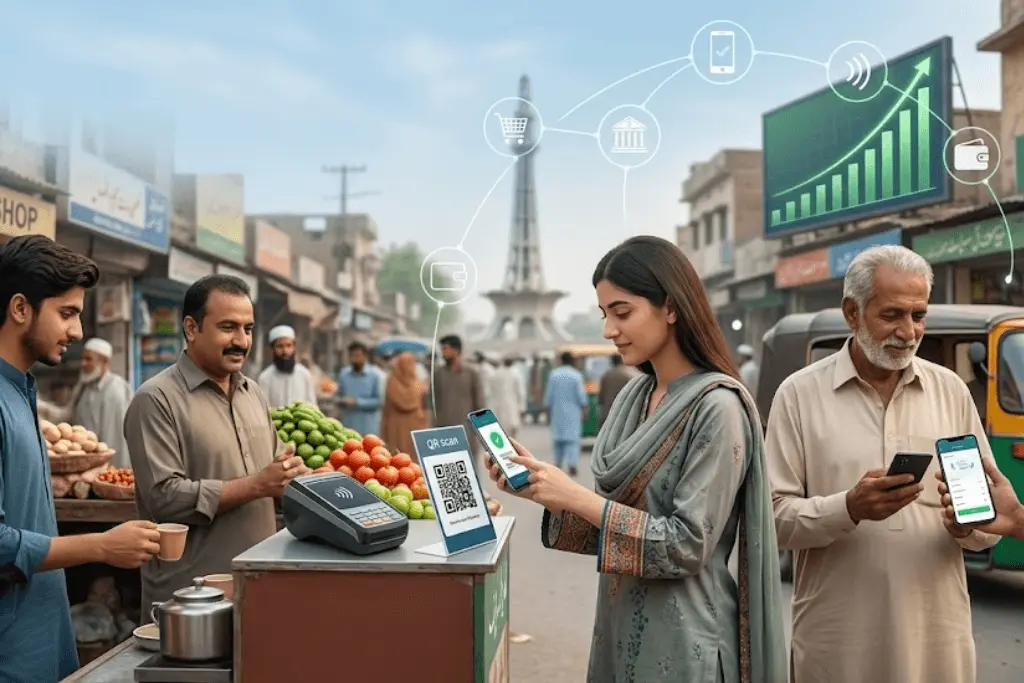
The initiative also fits into Pakistan’s wider digital transformation agenda through the Pakistan cashless economy plan, increasing financial inclusion, improving tax documentation, enhancing welfare delivery, and encouraging participation in the formal economy.
Digital financial services are becoming an integral part of everyday life as smartphone and internet connectivity spreads across the country, creating new opportunities for consumers, merchants, entrepreneurs and public institutions alike.
The Rise Of Digital Payment In Pakistan
Digital payments are the backbone of the cashless economy strategy of Pakistan. Government agencies, banks, fintech firms and payment service providers are coming together to make electronic transactions a common feature in urban and rural areas.
The State Bank of Pakistan’s instant payment system, Raast, is at the core of this transformation. Raast allows individuals, businesses and government departments to transfer money instantly at very low transaction costs. The platform connects financial institutions on a single infrastructure, allowing payments to be completed in seconds.
Raast To Enhance Digital Payment Infrastructure In Pakistan
Raast is one of the largest fintech initiatives in Pakistan. It was developed as an immediate payment system that makes secure electronic transactions between banks, financial institutions, businesses and government organisations possible.
It speeds up the rate at which money is transferred so payments can move quickly between member institutions. Transactions used to take hours to process, but now can be done almost instantly by digital means.
Raast also allows QR code payments, which enable businesses of all sizes to carry out digital transactions without the need for expensive point-of-sale equipment. This is especially good for small merchants, local markets and individual vendors looking for cheap payment options.
The wider use of Raast further builds Pakistan’s digital financial infrastructure and promotes faster and more efficient commercial transactions.
Qr Code Payments Are Transforming Local Commerce
QR code technology has become an integral part of Pakistan’s cashless payment ecosystem. Customers can also make electronic payments by scanning merchant QR codes with banking or mobile wallet apps that support the feature, without the need to use physical currency.
The QR-based payment system is being adopted by more and more markets, shops, restaurants, service providers and street vendors with very little investment and the benefit of secure digital transactions.
Islamabad is one of the most visible examples of such transformation. Public services, commercial centres and markets have boosted the acceptance of QR codes as part of larger initiatives to encourage digital commerce.
A great example of how digital payment technology can help with day-to-day transactions is the H-9 Sunday Market, and vendors are accepting electronic payments directly into their mobile devices via printed QR codes, and these developments are easier for the consumer and assist merchants in maintaining accurate digital sales records.
Growth In Financial Inclusion Fueled By Mobile Wallets
Many Pakistanis had been unable to use traditional banking services because of geographic, financial or administrative barriers, and mobile wallet platforms have eased these issues considerably by delivering financial services right on smartphones.
Through JazzCash and Easypaisa, you can send and receive money, pay utility bills, buy airtime, access savings products, get insurance services and explore digital lending opportunities, and these platforms have expanded financial inclusion by providing access for those without conventional bank accounts to formal financial institutions.
More financial access means more household savings, more business transactions and more people participating in the economy, especially those who have been left out.
With increasing smartphone penetration, mobile wallets are expected to play a bigger role in Pakistan’s digital financial ecosystem. Digital payment systems have made it possible to track legitimate financial flows and also enhanced accountability in commercial transactions.
Improved documentation also allows for better tax administration as it reduces dependence on undocumented cash transactions.
The shift to digital finance is part of Pakistan’s wider ambitions to strengthen economic governance and to boost the involvement of business and consumers in the formal economy.
More openness creates trust in financial institutions, and that is good for government bodies, financial supervisors, companies and consumers.
Welfare Digital Distribution Improves Service Delivery
Pakistan’s drive towards a cashless economy is also reaching out to social welfare programmes.
The Benazir Income Support Programme (BISP) and similar schemes are increasingly utilising digital wallets to deliver financial assistance. Direct electronic transfers cut down on manual cash distribution and make the delivery of welfare more efficient. The broader economy benefits from increased financial inclusion, improved documentation, higher productivity and adoption of digital innovation.
Pakistan’s Digital Future
The move of Pakistan to a cashless economy is a welcome step for building a modern tech-driven financial ecosystem. The continued investment in payment infrastructure, cybersecurity, online literacy, and mobile financial services will further enhance the country’s transition to electronic commerce.
Growing adoption of platforms such as Raast, JazzCash, Easypaisa, and QR code payment systems demonstrates increasing public confidence in digital financial solutions. The growing number of mobile banking users also reflects the growing involvement in electronic transactions in different parts of the country.