Farhan Qureshi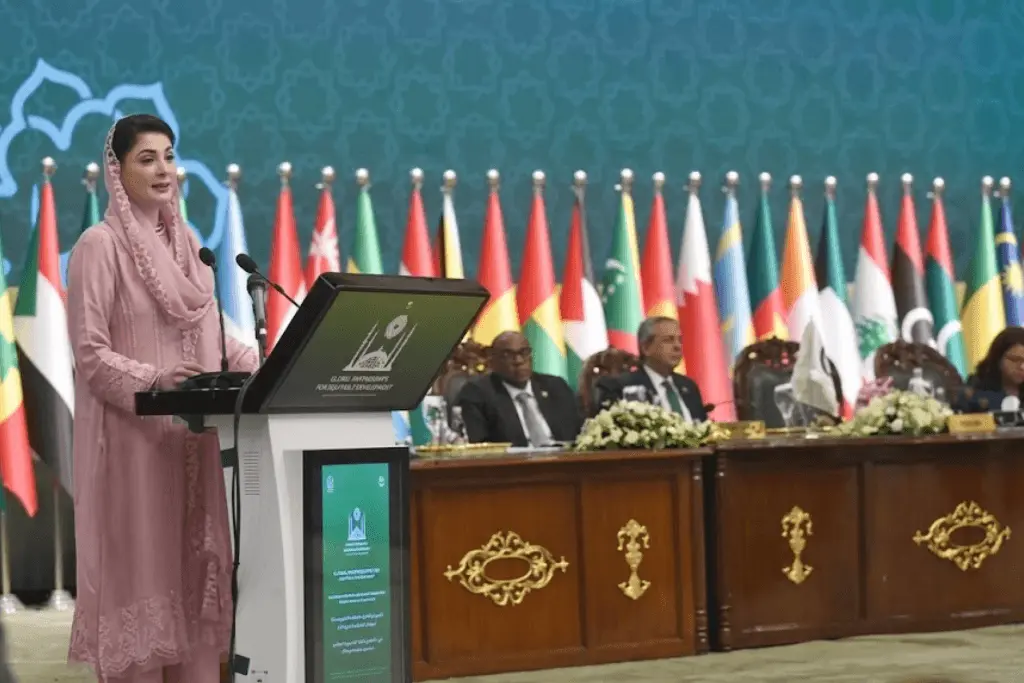
Punjab Chief Minister Maryam Nawaz Sharif has called for increased cooperation among the member states of the Organisation of Islamic Cooperation (OIC) to advance the OIC Women Empowerment Agenda across the Islamic world. Also speaking at the 9th OIC Ministerial Conference on Women in Islamabad, the chief minister reiterated that education, safety, economic opportunity and leadership for women are the cornerstones for sustainable national development.
Cm Maryam Calls For Collective Action In OIC States
Addressing the delegates from the entire Islamic world, Chief Minister Maryam Nawaz Sharif said that for any meaningful progress, there was a need for collective action, not individual action. The conference highlighted the value of sharing successful policies, strengthening partnerships and developing coordinated initiatives that support women in education, employment, health, entrepreneurship and public leadership.
The address highlighted how empowering women directly contributes to stronger economies, healthier communities and more resilient societies. The growth of opportunities for women was characterised as both a social goal and a strategic investment in the long-term growth of the nation.
Equal Education Remains A Key Policy Objective
Education was one of the strongest themes of the conference discussions. The policy vision proposed emphasised that quality education is a right of all girls, regardless of their background or circumstance.
Greater access to education leads to more people in the workforce, higher economic productivity and more vibrant community development. The initiatives are designed to boost academic achievement and prepare young women for jobs in a technology-driven economy of the future.
Women’s Development At The Centre: Safety And Dignity
Another important objective highlighted at the OIC conference is to create safe spaces for women and girls. Such actions are meant to boost institutional responsiveness and to build more public confidence in the available support systems.
The wider goal is to create safe and respectful environments where women can access education, employment, entrepreneurship and public participation.
Employment And Entrepreneurship For Economic Independence
Another important pillar of the conference discussions was economic empowerment. More economic participation also means more labour force participation and is conducive to broader development objectives within Pakistan.
The conference reaffirmed the essential function of improving access to jobs and entrepreneurship in achieving long-term gender-inclusive growth in OIC member countries.
Digital Inclusion And Technology Skills For 21st Century Economies
Digital transformation is becoming more and more important in education, business, healthcare and government services. The conference noted this trend and called for strengthening the role of women in technology and digital industries.
By equipping women with information technology skills, their employability is enhanced, and new sectors such as software development, digital entrepreneurship, online services, and remote employment opportunities are created.
Encouraging Women To Be Active Leaders
Women should be active participants in decision-making and not passive recipients of development programmes was another important message given at the conference.
Women’s growing presence in leadership roles in public administration, education, health care, business and civil society allows them to shape policy development and institutional governance directly.
The conference called on OIC member states to continue to create opportunities that enhance the capacities of women’s leadership and enable equal participation in all professional sectors.
Promoting women leaders also leads to broadening the horizons during policy-making and encourages more inclusive governance.
Support For Women’s Health And Welfare
Women’s health remains inextricably linked to broader social and economic development. The conference highlighted the significance of affordable health services that improve maternal health, preventive health, and community health.
Punjab has expanded a range of health initiatives focused on women, including clinics on wheels, field hospitals, maternal health programmes and a vast network of more than 60,000 female health workers reaching communities throughout the province.
These programmes improve healthcare accessibility while supporting early diagnosis, maternal services, child health, and community awareness.
Improving public health outcomes and expanding healthcare infrastructure also permits women to participate fully in education, work and family life.
Pakistan’s Contribution To Women’s Development Progress
Pakistan hosting the 9th OIC Ministerial Conference on Women is a testimony to its active engagement in global discussions on women’s development and inclusive growth.
The conference also provided a platform to highlight the ongoing provincial initiatives in Pakistan and to discuss common challenges and future cooperation with partner countries.
Pakistan cited programs in education, safety, digital inclusion, healthcare and economic empowerment as examples of policies that offer practical ways to enhance opportunities for women.
The focus on collaboration was also consistent with the overarching goal of strengthening partnerships among OIC member States in an effort to promote sustainable development across the region.
The Way Forward
The OIC Women Empowerment Agenda underlines the importance of concerted efforts to enhance women’s access to education, economic participation, health, security and leadership opportunities.
By sharing experiences and implementing practical reforms, collaboration can help to strengthen women’s participation in every sector of society with OIC member countries. Pakistan’s ongoing efforts in Punjab, for instance, highlight how investments in education, digital skills, entrepreneurship, healthcare, and public safety can act as a catalyst for wider development in the country and empower women as active agents of future economic and social development.