Sana Khalid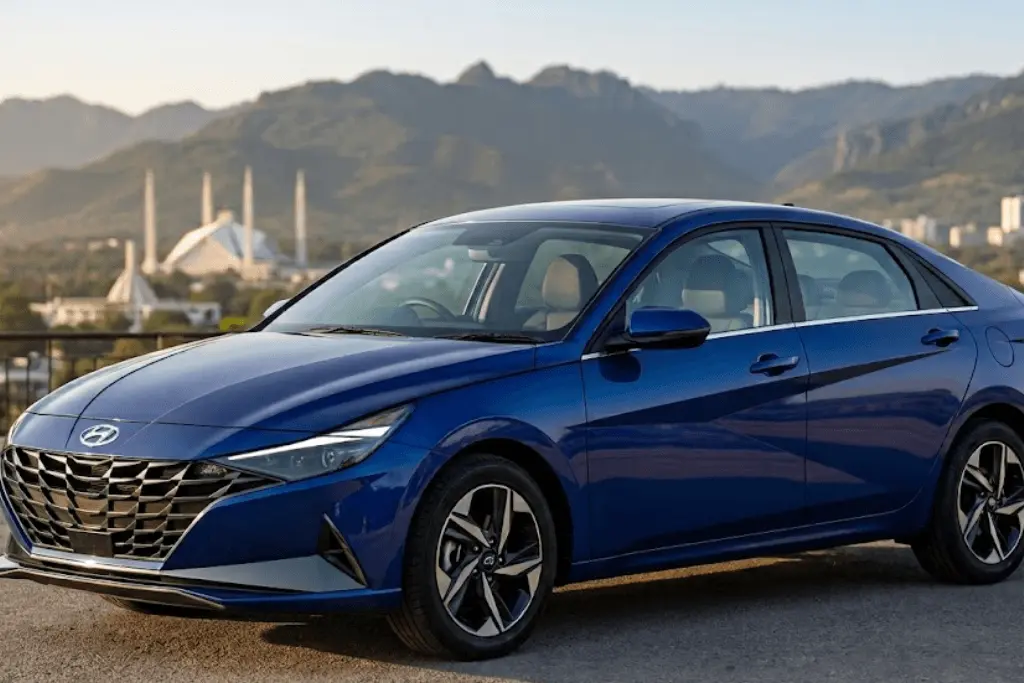
The global sedan market continues to develop as manufacturers increasingly incorporate electrification, artificial intelligence, and digital technology into everyday drives, making Hyundai Elantra hybrid Pakistan a key example of this shift. That shift is on display in Hyundai’s latest Elantra redesign, one of the most technologically advanced versions of the model to date.
The new 2027 Hyundai Elantra has a new exterior design, much-improved interior and an all-new generation of connected technology powered by artificial intelligence. Improvements to the hybrid powertrain and the possibility of better fuel economy will likely be of most interest to Pakistani buyers in a market where running costs are a key consideration.
2027 Hyundai Elantra Fully Redesigned
The eighth-generation Hyundai Elantra looks considerably more futuristic than the previous generation. The latest model from South Korea’s Avante features sharper body lines, a wider stance and a more premium visual identity to appeal to modern sedan buyers.
The front end gets a full-width LED light bar that stretches the entire width of the vehicle for a distinctive look day or night. The new Elantra’s revised styling direction is reinforced with a more angular front end while connected tail lamps and a sportier profile at the rear further help position the Elantra closer to premium sedan segments than previous generations.
Bigger Dimensions Make Passengers More Comfortable
One of the most useful gains is the extra room inside the cabin. The new Elantra is about 55mm longer and 30mm wider than the outgoing model, offering substantially better passenger space, particularly for those in the rear seat.
The Cabin Gets A Modern Minimalist Design
The interior redesign focuses on simplicity and improved usability. Perhaps the most notable change is the gear selector being moved from the centre console to the steering column, a feature becoming more common on premium electric vehicles and luxury sedans around the world.
Convenient Dual Wireless Charging
The extra space from the new console layout has allowed Hyundai to introduce several new convenience features. Another more notable addition is the presence of dual wireless charging pads that allow you to charge multiple devices at the same time, with no cables involved.
The feature highlights changing consumer habits as smartphones become increasingly embedded in everyday mobility experiences. Wireless charging technology has become a given in higher-end vehicles, and its addition only strengthens the Elantra’s premium positioning while adding to practicality for families and business users alike.
Hyundai Brings Artificial Intelligence To The Driving Experience
Perhaps the biggest development is the inclusion of artificial intelligence. The new Elantra also gets Hyundai’s Gleo AI assistant, which is a massive upgrade over the typical voice command systems that require strict, pre-set commands.
Unlike previous systems that required precise commands, the AI assistant is designed to understand natural conversation and context-based requests. The technology can help with navigation, change vehicle settings and display information more naturally, reflecting a wider industry movement toward conversational interfaces driven by artificial intelligence.
Gleo AI Is More Than Just Voice Commands
Gleo AI is engineered to overcome these limitations and handle requests more naturally, responding more humanly.
Drivers could be able to set the climate control, look for destinations and retrieve information in everyday language instead of using pre-defined commands. The technology could bring a lot more convenience and fewer distractions to driving, and show how artificial intelligence is becoming one of the defining technologies in the automotive industry.
Bigger Screens Change The Dashboard Experience
The digital transformation continues with the implementation of larger displays across the entire dashboard. The latest Elantra has screens up to 14.6 inches running on Hyundai’s new Android-based Pleos Connect operating system.
Bigger screens make it easier to see and get to the navigation, entertainment and vehicle settings. The refreshed interface is in line with customers wanting smartphone-like experiences inside the vehicle, while digital dashboards and connected infotainment systems are increasingly becoming standard expectations amongst younger buyers.
Physical Buttons Are Still In The Design Philosophy
While the market has trended toward bigger touchscreens, Hyundai has kept physical controls for key functions like climate settings and audio volume controls. Many automotive experts believe this method is safer, allowing for adjustments to be made without taking eyes off the road.
The combination of digital interfaces and physical controls might also enhance usability and safety. It’s likely that consumers who want tactile controls for frequently used functions rather than relying entirely on touchscreen menus will welcome the decision.
Hybrid Technology Might Be The Biggest Draw
For many buyers in Pakistan, the most important development could be the introduction of an improved hybrid powertrain. The new 1.6-litre hybrid system makes approximately 157 horsepower and is more efficient than past generations.
The extra power output enhances acceleration and driving performance while retaining the benefits of fuel efficiency. With fuel prices still a key factor in consumer decisions, hybrid technology is growing in popularity in several vehicle segments, and the Elantra’s hybrid system could be one of its best-selling points.
Regenerative Braking Increases Efficiency
The hybrid model is fitted with advanced energy management systems to maximise fuel saving. Regenerative braking is a technology that recaptures the energy generated when slowing down and recycles it back into the car’s battery. It’s a way to minimise energy loss during normal driving.
This leads to greater efficiency and less reliance on regular fuel consumption while city driving.
Smart Route-Based Energy Management For Performance Boost
The system assesses driving conditions, optimising use of the battery according to traffic patterns and road characteristics to maximise efficiency.
Such technologies enable performance to be improved without the driver having to do anything extra. Predictive systems and artificial intelligence are expected to play an increasingly important role in future hybrid and electric vehicles, and the Elantra is an example of how quickly those technologies are moving into mainstream models.
Expectations From Pakistani Buyers
Hyundai Nishat Motor locally assembles the current generation Elantra in Pakistan. A new model is expected to be unveiled globally in the coming days, but a local rollout could take longer due to build schedules, localisation requirements and market conditions.
“Usually, global vehicle launches are done after arrangements for local manufacturing are made in Pakistan. But the fact that the country is increasingly interested in hybrid vehicles, that may make it more attractive to introduce the latest generation sooner rather than later.
Hybrid Technology Could Suit Pakistan’s Market Needs
A hybrid Elantra, locally assembled, could go a long way in strengthening Hyundai’s position in Pakistan’s competitive sedan segment. Fuel economy remains one of the most important buying considerations for consumers across the country, especially as motorists increasingly look to reduce running costs.
A hybrid sedan that combines lower operating costs, advanced technology and premium comfort could generate a lot of interest among urban professionals and family buyers.