Farhan Qureshi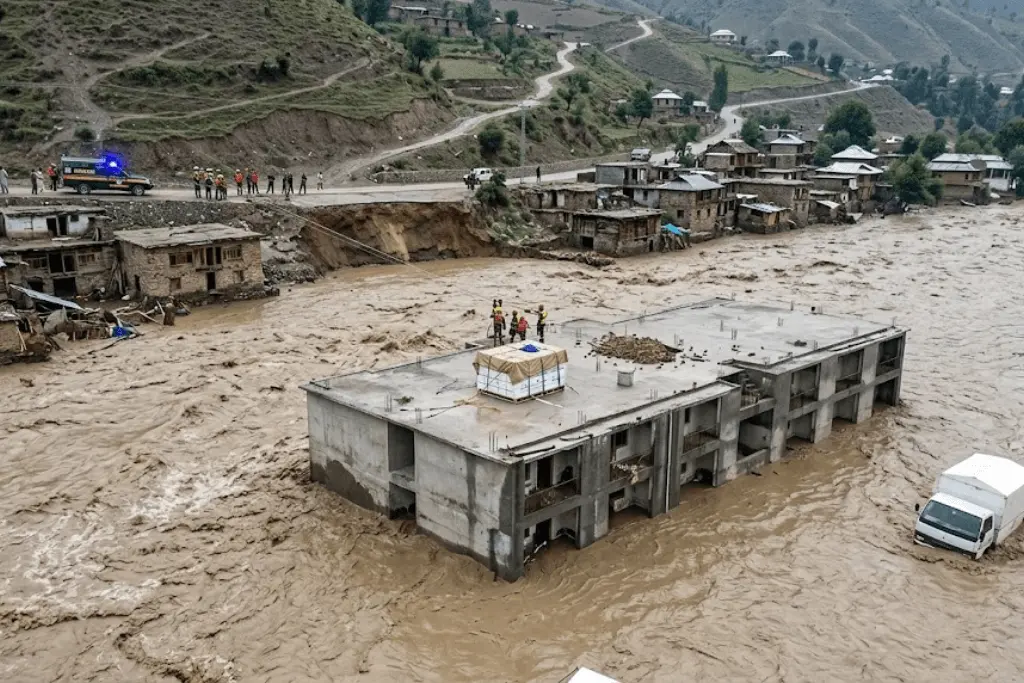
Parts of Khyber Pakhtunkhwa have been hit by a serious flash flood emergency, with torrential rains and lightning storms causing widespread destruction in Kana, a tehsil of the remote Shangla district. The disaster particularly hit Lodhar and the adjoining mountainous areas as powerful floodwaters damaged roads, homes, power facilities and agricultural land and isolated multiple villages from the rest of the district.
The flash floods followed torrential rains that hammered the region Sunday evening, turning seasonal streams and hill torrents into dangerous currents in a flash. Residents described scenes of panic as heavy rain and repeated lightning strikes created flash flood conditions all over the valley.
Villages are isolated after roads and transport links collapse
The most severe consequence of flooding in Shangla has been the damage to vital road infrastructure connecting remote mountain settlements to the neighbouring districts.
Local reports said the force of the floodwaters washed away large portions of the main Lodhar road at several places. Several connecting roads between isolated villages were also badly damaged, severing transportation access to local communities.
The breakdown of transport routes has isolated some mountain villages from their inhabitants and hindered the passage of emergency help, medical aid and basic goods.
Local authorities said the fast-moving floods and debris-filled waters added new hazards to already vulnerable roads and pathways. In some areas of the district, the risk of landslides is still high as the unstable terrain and continuous rainfall threaten the transportation networks.
Restoring temporary road connectivity is one of the highest priorities for emergency teams working in the Kana tehsil and surrounding areas, officials say.
Homes and community infrastructure suffer extensive destruction
The flood caused extensive damage to the residential areas of Lodhar and its surrounding villages. Residents said at least 12 houses were partially damaged or destroyed after being hit by strong water currents and debris flows.
Reports indicate that several families had to spend the night outdoors because their homes were unsafe or inaccessible during the flooding emergency. Walls, foundations and rooftops were damaged by debris-filled water, and some houses developed serious structural cracks due to repeated blows by floodwater.
Community infrastructure was also badly impacted. The traditional water mills and locally operated micro-hydro power stations were washed away or made non-functional by the disaster.
Lightning strikes and heavy rainfall intensified the disaster
Residents said several lightning strikes were reported in Lodhar and nearby settlements just before the heaviest rains fell. The weather is reported to have gone bad very quickly, in just a short period of time, and residents were panicking because of the severe storms.
Meteorological experts say the flash floods were caused by a combination of sudden high-intensity rainfall, mountain runoff and rapidly overflowing seasonal streams.
The rugged, high mountainous terrain of the Shangla district makes the area vulnerable to flash flood emergencies due to rapid accumulation and flow of heavy rainwater through the narrow valleys and river channels.
Experts have warned increasingly that the mountain areas of northern Pakistan are becoming ever more vulnerable to extreme weather events as the changing rainfall patterns and increasing environmental instability take hold.
Communication and electricity disruptions are affecting relief coordination
The disruption of local micro-hydro stations and electrical systems has disrupted the supply of electricity and communication infrastructure in many parts of the valley.
Many of the affected communities have reportedly lost mobile connectivity and access to local communications due to damaged power systems and disrupted transmission facilities. As a result, emergency responders still face challenges in coordinating relief operations in remote mountain areas.
Locals said the power systems, installed by the community, had been constructed through local initiatives over a number of years, and were critical in supporting everyday life in remote settlements.
Relief and rehabilitation demands are growing across the Shangla district
The residents of Kana tehsil and Lodhar areas have appealed to district authorities and the provincial government to expedite emergency relief and rehabilitation operations in flood-hit areas.
Community representatives demanded immediate repair of damaged roads, financial aid to displaced families and micro-hydel stations that serve remote settlements.
Emergency relief teams are monitoring vulnerable settlements near streams and unstable slopes, which could be hit by further flooding or landslides from additional rains.
Pakistan’s northern regions remain vulnerable to extreme weather events
The flooding emergency in Shangla is another stark reminder of the environmental vulnerability of northern Pakistan’s mountainous districts during spells of intense weather activity.
Experts have repeatedly stressed the need for strong infrastructure, early warning systems and better disaster preparedness in vulnerable areas like Shangla, Swat, Chitral and Dir.
Authorities also appealed to local communities to stay alert to weather advisories and to avoid going near rivers, seasonal streams and unstable stretches of road during periods of active rainfall.