Sana Khalid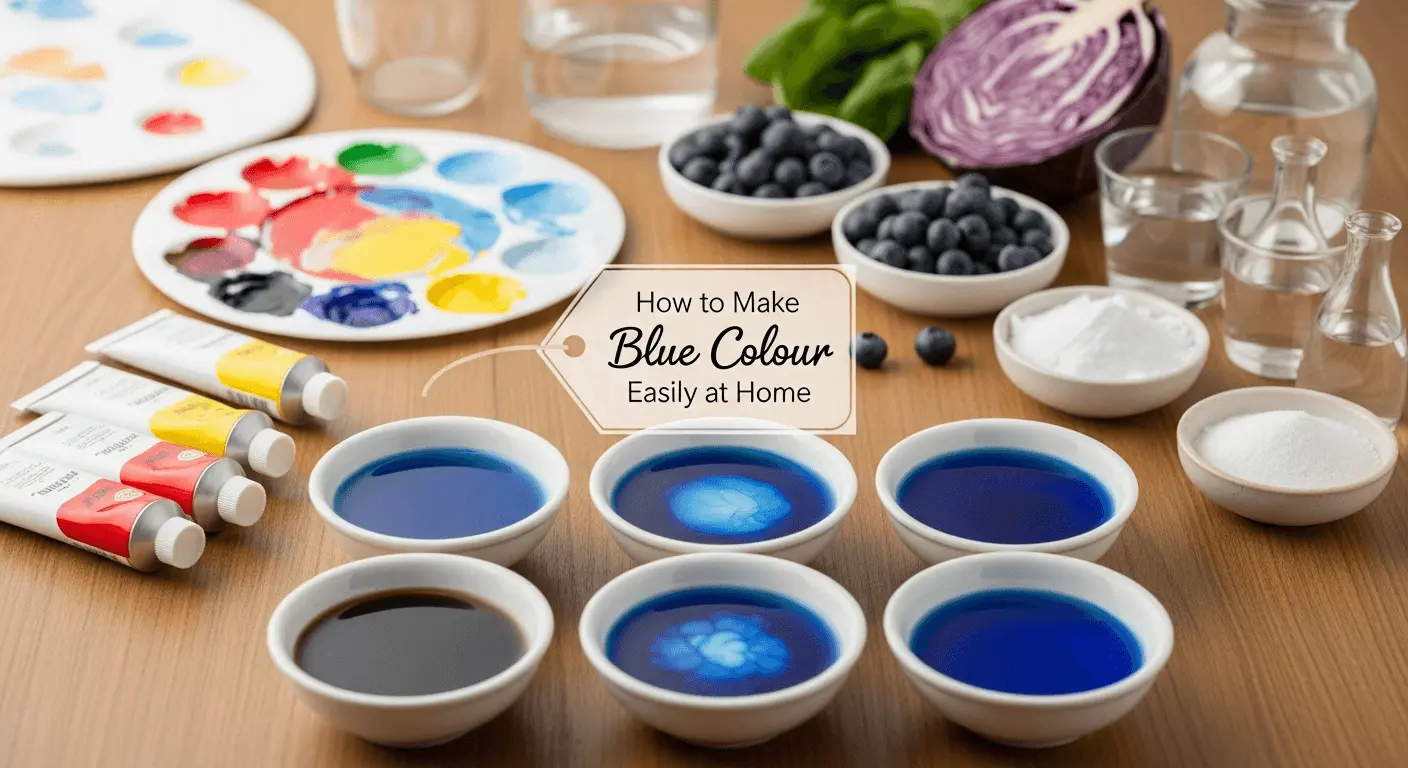
One of the most significant and popular colors in art and design, as well as the daily life, is blue. In painting and crafts, food colouring, fashion colouring, and DIY, learning how to make blue colour is a handy skill to artists, students and DIYers. Blue is associated with calmness, creativity, and trust and, therefore, is a popular color among industries. This paper can tell how one can make blue colour with simple color mixing techniques, natural ingredients and practical techniques that the individual can do it. It does not matter whether you are using paints, food materials, or a natural material, this guide will enable you to learn the proper techniques of making blue colour both accurately and creatively.
What Is Blue Colour?
The color blue is a primary color in the RGB system of colors and cannot be formed by mixing other hues in the conventional painting systems. The various colors of blue may however be achieved with varying tones, materials or media. Knowing how to make blue colour is useful to light and deepen blue colour as well as make it custom made to apply in various ways.
How to Make Blue Colour Using Paints
In dealing with paints, pure blue is a primary pigment normally in use. You can alter blue easily though, to different shades. White paint mixed with blue paint gradually will make light blue. A little bit of black or purple will produce dark blue. Artists tend to experiment with colouring materials, to learn on the ways of how to make the changes in colour blue to fit in artwork and design projects.
How to Make Blue Colour Naturally
In the case that you are interested in the natural process, there are a number of organic means to make blue. The butterfly pea flowers are also used to extract blue dye that is applied to food and beverages. Baking soda can also produce blue color when combined with red cabbage. These are safe, environmental friendly and ideal ways of learning how to make blue colour without chemicals.
How to Make Blue Colour for Food
The simplest method of getting blue in cooking and baking is by food coloring. Natural substitutes such as blueberry juice or butterfly pea flower extract are however becoming popular. These are healthy and also appealing to the eyes. Knowing how to prepare blue colour in food provides improved control on shade and consistency.
Tips to Get the Perfect Blue Shade
Never combine colors too fast otherwise, it may overwhelm the shade. Clean tools should be used to avoid contamination. Blot test prior to complete application. These basic tips will enhance your outcome when you learn on how to make blue colour as it can be used in various ways. Click here to know more tips and tricks.