Farhan Qureshi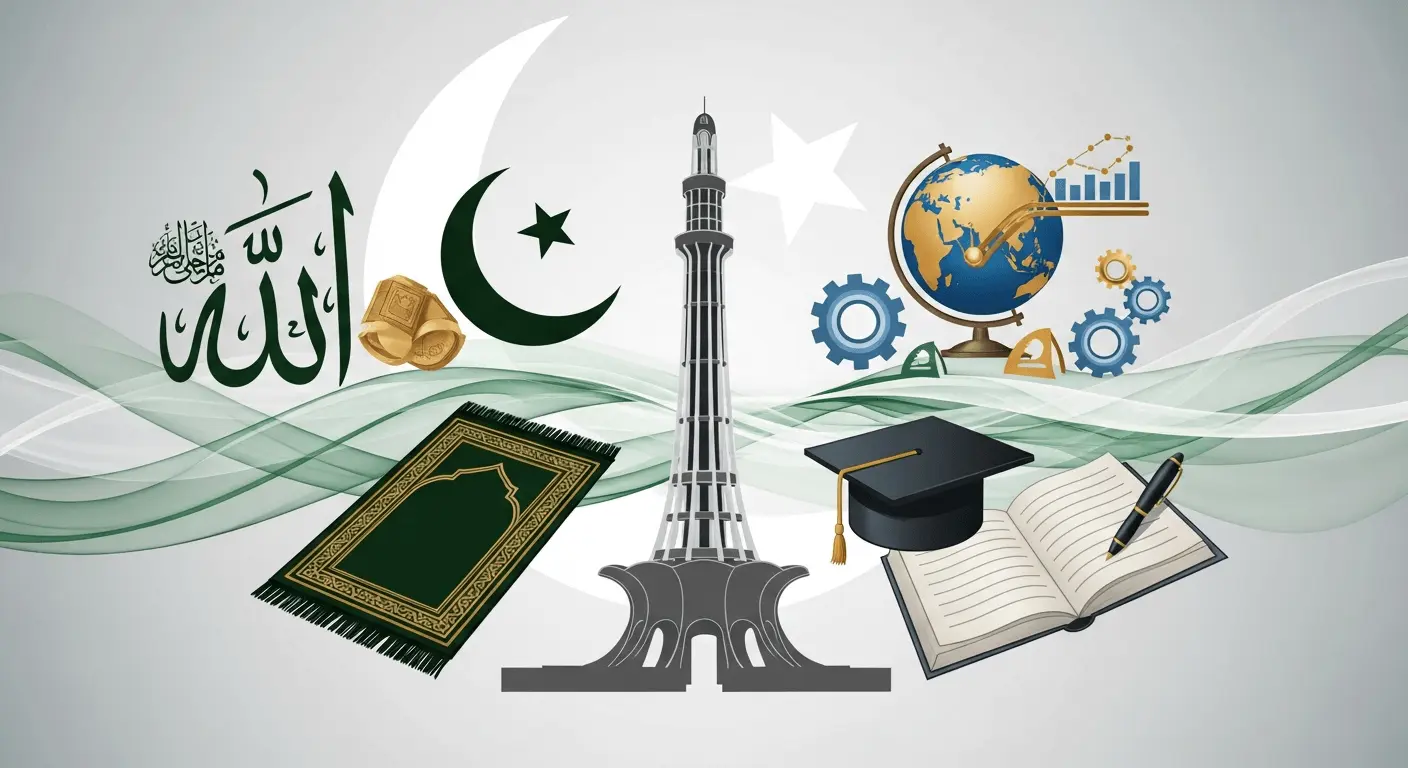
Pakistan as a nation was established on the ideology of Pakistan. It was formed out of the political, religious and cultural ambitions of the Muslims in British India who wanted to have their own land to practice under the Islamic values. This ideology was closely tied to the Islam and Two-Nation Theory that stressed on that Muslims and Hindus are two different nations. The ideology of Pakistan has influenced the constitution, political organization, and national identity of the country over time that has evolved to support modern governance and still maintain the Islamic background.
Meaning of the Ideology of Pakistan
Pakistan ideology is a set of principles that resulted in the formation of Pakistan in 1947. It is founded on the fact that Islam is a detailed map that gives a code of life, which includes the social, political, and economic aspects. The Pakistan ideology sought to bring freedom, dignity, and security to Muslims to enable them to practice their Islam with no fear and discriminations.
Two-Nation Theory as the Foundation
The Two-Nation Theory is the center of ideology of Pakistan. According to this theory, Muslims and the Hindu were not just religious communities but different countries, with different traditions, cultures, and values. These differences necessitated the Muslims to have their own state to protect their religious and political interests. The Two-Nation Theory was the ideological explanation of the demand of Pakistan.
Islam as the Ideological Base
The ideology of Pakistan is supported by Islam. It focuses on the sovereignty of Allah, equality, justice and social welfare. The Islamic teachings were to inform the legal, political and social institutions or the new state so that there was justice and harmony among the citizens of the new state.
Vision of an Islamic Democratic Welfare State
The Pakistan ideology also had a vision of the country as an Islamic democratic welfare state. This entailed a blend of democratic government and Islamic principles i.e. economic justice, safeguarding of minorities and social responsibility. Democracy was considered to be congruent with Islam, as long as it respected the moral values and social good.
Role of Key Leaders
The ideology of Pakistan was given the philosophical support by Allama Muhammad Iqbal who suggested a separate Muslim state in the subcontinent. Quaid-e-Azam Muhammad Ali Jinnah made this concept come to reality. He saw Pakistan as a progressive nation that was modeled after Islamic concepts, where freedom, equality and the rule of law were enjoyed by people.
Ideology of Pakistan in the Modern Context
The ideology of Pakistan is constitutionally accepted today because Pakistan is an Islamic Republic. Although the state transforms into parliamentary democracy, it still tries to strike the balance between Islamic and modern political and social issues without losing ideological foundations. Visit this site for more details.