Urooj Niazi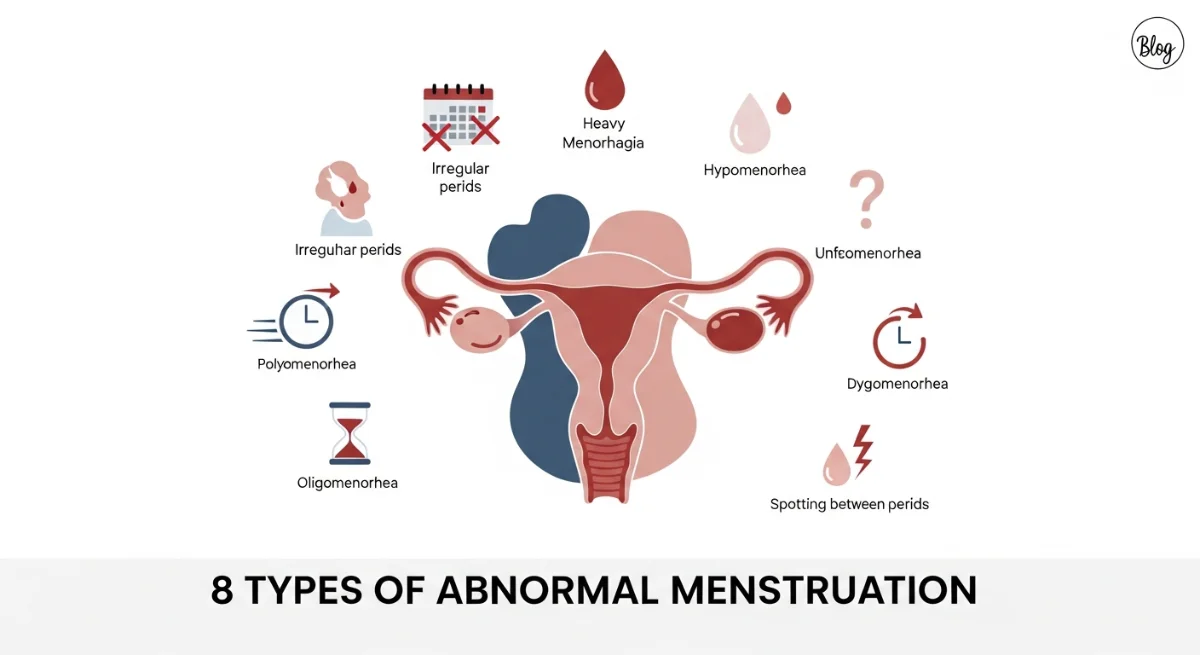
Learning about the 8 kinds of abnormal menstruation is a necessity of any woman who has irregular menstrual cycles, painful menstruation, or any sudden changes in the menstrual cycle. The menstrual health is a diverse topic but when abnormalities are manifested regularly, then it indicates something might be wrong with the body and may need to be addressed. Uncharacteristically heavy bleeding, missed periods, frequent cycles, or drastic PMS, all of these types of injuries tell you valuable information concerning your reproductive health. This paper defines 8 forms of abnormal menstruation, their cause, symptoms and treatment options, which will help you know when to seek medical assistance. Through adequate counseling, majority of the menstrual irregularities are manageable.
Table of Contents
1. Menorrhagia (Heavy & Prolonged Bleeding)
Menorrhagia is defined as excessively heavy or prolonged bleeding, and they tend to be longer than seven days or the presence of more than 80 mL of blood loss. It is also among the most prevalent of the 8 types of abnormal menstruation. The causes are hormonal disorder, thyroid illness, fibroid, pelvic infection, pregnancy complications and use of IUD. Women can be fatigued, clotted and anemic. Treatment is by treating the underlying cause such as hormone therapy or even surgery in extreme instances.
2. Polymenorrhoea (Frequent Cycles)
Polymenorrhoea is a condition where menstrual cycles take a shorter period than 21 days resulting in over one menstrual period of a month. Even though the flow is normal, frequent cycles may have an influence on fertility. This type of the 8 types of abnormal menstruation could be a stress trigger, PCOS trigger, fibroid trigger, hormonal imbalance trigger, or medications trigger. Early treatment and evaluation assist in recovery of normal cycle length and avoidance of complications.
3. Dysmenorrhoea (Painful Periods)
Dysmenorrhoea is characterized by severe menstrual cramps and back pain. Primary dysmenorrhoea is the menstrual cycle that begins when periods commence and secondary is developed as a result of various conditions like endometriosis, fibroids, or pelvic infections. Pain persisting over three days and interfering with the normal performance of activities is one of the 8 types of abnormal menstruation that are considered critical and have to be medically examined to exclude underlying conditions.
4. Amenorrhoea (Absence of Periods)
Amenorrhoea is defined as the absence of periods in three months consecutive (secondary amenorrhoea) or late first periods after the age of 15 (primary amenorrhoea). Being one of the 8 forms of abnormal menstruation, the abnormalities are either characterized by acne, headaches, loss of hair or excessive hair growth. The causes are pregnancy, hormonal disorders, stress, weight change, thyroid problems or chronic diseases. The way of treatment depends on the cause.
5. Hypomenorrhoea (Light Periods)
Hypomenorrhoea refers to very light with little flow and it usually takes one or two days. It can be a natural process in the period of puberty or pre-menopause. Others also trigger it such as contraceptive pills, IUDs, hormonal imbalance or such conditions as the Asherman syndrome. Persistent light bleeding should be considered although this is not harmful in most cases.
6. Oligomenorrhoea (Infrequent Periods)
Oligomenorrhoea is whereby the periods are irregular and unpredictable with a cycle of over 35 days. It occurs in numerous women and is usually associated with PCOS, thyroid diseases, diabetes or obesity or adrenal gland issues. When untreated, it may pose a threat of infertility, cardiovascular problems, as well as complications of the endometrium.
7. Premenstrual Syndrome (PMS)
PMS has emotional and physical symptoms like irritability, tenderness of breasts, bloating, mood changes, headaches, and cravings. Even though it is common, extreme PMS may affect everyday operations. Because PMS is classified as one of the 8 kinds of abnormal menstruation, lifestyle modification, stress management, and medical advice can be used to alleviate the symptoms.
8. Premenstrual Dysphoric Disorder (PMDD)
PMDD is more serious than PMS, and it leads to extreme mood fluctuation, anxiety, anger, insomnia, bloating, and fatigue. Women who are depressed or have a history of depression in their family have a higher probability of developing PMDD. It can be treated using therapy, drugs, and lifestyle interventions.