Sana Khalid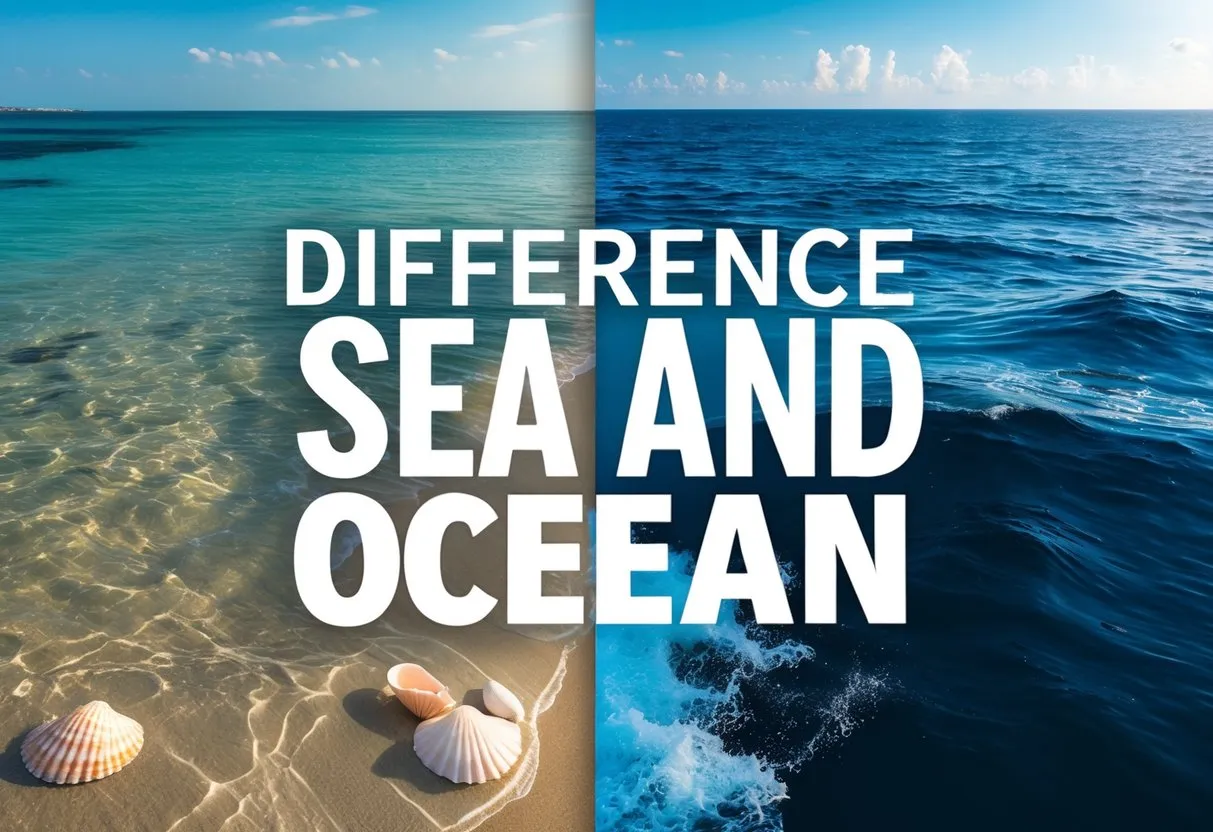
Difference Between Sea and Ocean
The difference between sea and ocean is a critical knowledge that geography students, tourists, and other interested persons should have about all the water bodies on Earth. Seas and oceans are not identical, despite the fact that these terms are used interchangeably. They are of various sizes, depth, location, marine life and ecological significance. Seas tend to be smaller, shallow and are in some way surrounded by land whereas oceans are large, deep and constitute the largest connected mass of salt water on earth. This paper describes their key differences, features, and importance in a simple and easy manner, making it easy to tell the difference between seas and oceans.
Sea vs. Ocean: A Basic Definition
Sea is a large saltwater mass, which is usually smaller and shallower than an ocean. The seas are usually partly surrounded by the land and attached to an ocean. These are the Arabian Sea, Mediterranean Sea and Red Sea. Ocean in its turn is the greatest and the deepest saltwater on the planet. More than 70% of the surface of the planet is covered by oceans which are segmented into Pacific, Atlantic, Indian, Arctic and Southern Oceans.
1. Size and Depth
The primary distinction between sea and ocean is that they are different in size.
Seas
- Smaller in area
- Much shallower
- Surrounded partly by land
- Easier for navigation and exploration
Oceans
- Vast bodies of water covering millions of square kilometers
- Extremely deep, with trenches like the Mariana Trench exceeding 10,000 meters
- Hold most of Earth’s water volume
Oceans are more complex with respect to ecosystems and stronger currents due to their size and depth.
2. Location and Boundaries Difference Between Sea and Ocean
The seas are commonly found at the periphery of the oceans and are near the continents. They are partly bounded by land, and this affects their temperature, salinity, and biodiversity. Oceans, however, lack any rigid boundaries, but extend over the whole continent. These are interrelated such that the relationship between them forms one massive water system in the world, the World Ocean.
3. Marine Life and Biodiversity
Seas have great marine life owing to their warmer, shallow and increased sunshine. They tend to be biologically productive zones where fishing and tourism activities are done. Oceans have a combination of shallow and deep water species. Although life in deep ocean areas is less favorable, the diversity of living organisms is enormous, both in terms of the size (small planktons to massive whales).
4. Salinity and Temperature of Difference Between Sea and Ocean
The saline content of seas and oceans is distinctly different and that is mainly due to the mixing of river water and the proximity to the land. It is a fact that the salinity level of the oceans is quite stable while seas possess warmer temperatures that are mainly due to their small breeds and being close to the land. The hot water of the ocean has a very wide range of temperature that is most pronounced in deep areas where the sun cannot reach to provide heating.
FAQs
1: What is the main Difference Between Sea and Ocean?
The main Difference Between Sea and Ocean is that oceans are larger, deeper, and cover most of Earth’s water, while seas are smaller, shallower, and usually partly enclosed by land.
2: Why are seas considered part of oceans?
Seas are considered part of oceans because they connect directly to larger ocean bodies and share the same saltwater, but they remain smaller due to surrounding land.
3: Which is deeper, a sea or an ocean?
Oceans are much deeper than seas, reaching thousands of meters in depth, while seas remain shallow due to their location near landmasses.